Saturday, April 30, 2011


Wednesday, April 27, 2011
The Power of A Title

What does a title say about your work? I don’t know about you, but sometimes I cringe and shield my eyes with embarrassment when I see a ridiculous title. It’s kind of sad, really. As writers we can spend months or even years writing a wonderful story that becomes our baby and then the baby is beaten over the head with the ugly stick of a bad title.
Am I the only one who sees this? I don’t think so.
A title is often a reader or viewers first impression of a book or movie. They make their first decision about the worthiness of the work by hearing the title. If the title seems reasonable and interesting they may look at the cover. If the cover is attractive they may read the blurb on the back and if the blurb intrigues them they may thumb through and read a couple of sample pages to get a feel for the writing. If I’m right in believing that a good title can help a work in reaching the right audience, a BAD title can really hinder the success of a book or movie when it screams to the audience “I’m not worthy of your time,” or “I’m too stupid for you to bother with.”
What should a title tell the audience about the book or movie?
1- It may hint at an important thematic element
2- It may introduce the audience to a main character
3- It may give a peek into the story
4- It may clue the audience to the genre, style and tone
5- It may provide mystery and intrigue
Lets look at a few examples of good and bad titles in movies and literature.
Cowboys and Aliens- Okay, they lost me already, but the good news is the title gives a clear image of what the movie is supposed to be. It clues the audience in to the genre and style. So why is it bad? Because it sounds ridiculous, in my humble opinion. The movie may have some redeeming qualities but I am not willing to give it a shot. Someone, somewhere must feel different. I just haven’t met that person yet.
Am I the only one who sees this? I don’t think so.
A title is often a reader or viewers first impression of a book or movie. They make their first decision about the worthiness of the work by hearing the title. If the title seems reasonable and interesting they may look at the cover. If the cover is attractive they may read the blurb on the back and if the blurb intrigues them they may thumb through and read a couple of sample pages to get a feel for the writing. If I’m right in believing that a good title can help a work in reaching the right audience, a BAD title can really hinder the success of a book or movie when it screams to the audience “I’m not worthy of your time,” or “I’m too stupid for you to bother with.”
What should a title tell the audience about the book or movie?
1- It may hint at an important thematic element
2- It may introduce the audience to a main character
3- It may give a peek into the story
4- It may clue the audience to the genre, style and tone
5- It may provide mystery and intrigue
Lets look at a few examples of good and bad titles in movies and literature.
Cowboys and Aliens- Okay, they lost me already, but the good news is the title gives a clear image of what the movie is supposed to be. It clues the audience in to the genre and style. So why is it bad? Because it sounds ridiculous, in my humble opinion. The movie may have some redeeming qualities but I am not willing to give it a shot. Someone, somewhere must feel different. I just haven’t met that person yet.
The Incredibly Strange Creatures Who Stopped Living and Became Mixed up Zombies- Attack of the Killer Tomatos- Pride and Prejudice and Zombies- etc. etc. See my comments for Cowboys and Aliens. These titles are BAD and they tell me that the movie or book is also BAD. But at least they’re honest. They are not pretending to be something they’re not so the audience can go into the experience with their eyes wide open.
Pooh Gets Stuck and Cooking with Pooh- These are BAD titles because…do I seriously have to explain it? Maybe my middle schooler is rubbing off on me but come on. Many titles with “Pooh” in the title are going to seem a bit…funny. Future titles such as, Tigger Plays with Pooh and Pooh Runs would be just as bad. Sorry for the gross out. The good thing about these titles is it clues the audience into the genre and introduces the main character. And though I‘ve never read it, I suspect Cooking with Pooh is about…cooking. I like knowing what I’m going to get.
Water For Elephants is another title I absolutely hate but it does manage to accomplish at least part of what it intends. To me the title sounds kind of artsy so if it is appealing to the artsy crowd—Mission Accomplished. An alternate title might have been Carnie Love. Carnie Love tells me a little more about what the story is about, but would misinform me about the tone and genre of book/movie. If I saw Carnie Love on the Marquee I would expect something with Adam Sandler, not a dramatic love story.
Here are a couple of my other favorites, just for fun.
I’m Gonna Get You Sucka! – What assumptions do you make from this title?
Buffy the Vampire Slayer- This introduces us to the main character, explains the genre, style and tone of the movie, and tells us what the movie is about.
So while many of these titles are a bit silly or painful, they may not actually be as bad as we think at first glance. I actually appreciate the honesty and creativity of these titles. I doubt anyone who does a Google, Amazon or Goodreads search of The Incredibly Strange Creatures Who Stopped Living and Became Mixed Up Zombies, will find multiple books or movies using the same title. I personally prefer a more concise, pithy title, but to each his own.
Check out my blog for some of my favorite movies with titles I love.
What is my point to all of this? Simple. Take the time to create a memorable title that informs the reader in some meaningful way. Come up with an entire list of titles. Chances are pretty good your publisher won’t LOVE the working title of your novel. Spend the time to come up with alternatives. If you don’t, they will. It’s a little strange to me that a writer may spend months or even years writing their book but only give the title secondary thought.
A title does matter. It can be powerful, serious or funny, mysterious or foreboding. Give your choice of title its proper attention and choose multiple titles that fit your work. Make sure you love them and then submit them to the publisher. Maybe the publisher will still edit your title, but don’t shortchange yourself by failing to give your title its proper attention and abdicate the naming of your work to someone else.
What do you think? I would love to hear your comments about the titles you hate.
Monday, April 25, 2011
Autism Awareness- Guest Blogger Danyelle Ferguson

 Filling the Spiritual Cup for People with Autism and Their Families
By Danyelle Ferguson
April is Autism Awareness month. Throughout the month we hear a lot about signs to look for, the stress of raising a child with autism, and even about legislature bills and hope for a cure. But one area that hasn’t been discussed is how to help individuals with autism and their families be a part of their church congregation.
I know from personal experience how difficult it is to regularly attend church with a child who has behavioral, sensory, and transition issues. For a good eight years, my son couldn’t handle the lights in our chapel, the echoes from the microphone system, or the crowds of people. During the majority of those eight years, my husband and I took turns staying home with our son during the larger congregational meeting, then going with him to attend his Sunday school classes. We were lucky to have people in our congregation who worked in special education. They volunteered to help our son understand the church routine and adapt lessons so he would understand the teachings. But most church leaders are overwhelmed and unsure how to serve and help families with special needs.
Today, I’d like to share a few tips for church leaders and congregation members to help individuals with autism, as well as some ideas of how to support the whole family.
1. Ask if the child with autism is using any techniques at school to understand his schedule. Many children with special needs use a picture system or a written detailed daily calendar so they know what to expect. If there is something the child is using successfully at school, then take that concept and use it at church too. Many school teachers are happy to provide any special instructions that may be needed to create the schedule.
2. Find out about the child’s interests, hobbies, and strengths. Then become his friend. Talk to him about the things he’s interested in. Don’t be afraid to think outside of the box to express gospel teachings. For example, if a little boy loves to play Mario video games, then talk to him about how Mario is a good friend to Luigi. Then reinforce that concept with how Jesus wants us to be good friends with everyone. If the little boy asks if Jesus loves Mario, then say yes. To that little guy, Mario is just as real as you are. Be willing to enter the child’s world and share your teachings in a different way that is appealing to him. He’ll not only remember what you taught him, but he’ll also start to seek you out because he enjoys talking to you.
3. Take the time to figure out how you can help the parents refill their cups each week. Give them an opportunity to take a break and attend their Sunday school classes. When parents have the opportunity to decompress and enjoy church services, then they are much happier in their lives all around. They are better parents, better spouses, and have more patience to take on the challenges that await them during the upcoming week.
4. If the child with special needs has a difficult time during the larger congregational meeting, then friends could ask to take the child for a walk in the halls. If you often sit near this family each week, you could bring a few quiet items in your bag that this family’s kids would enjoy. If the parents need to go out with cranky kids or diaper changes, you could offer to sit with their other children. It’s often little things that make a huge difference. I often felt like our family was the misfit family of the congregation. It was other families who showed us a bit of extra love who helped me feel welcome and accepted at church.
5. Pray for the family and let the family know that you are praying for them. The power of prayer combined with the knowledge that others are praying for you is powerful. Answers and miracles come through prayer. Be specific in your prayers . . . and also be willing to listen for promptings to follow when they are given as well.
There are a million other things I’d love to share with you as well. This is just the tip of the “advice” mountain. Overall, what I feel the most important thing a church leader can do for anyone living with autism (or any other special needs) is to genuinely be interested in them and show love through friendship and service. Do as the Savior taught and “Love One Another”.
Danyelle Ferguson is the author of (dis)Abilities and the Gospel: How to Bring People with Special Needs Closer to Christ. She enjoys helping others along the journey of special needs through parent support group presentation, church program trainings, and answering emails from her readers. You can find out more about Danyelle on her website: http://www.danyelleferguson.com/
Give Back to Your CommunityIn conjunction with Autism Awareness Month, Danyelle is donating 1 copy of her book, (dis)Abilities and the Gospel, to a church, charity or library, for every 10 book orders she receives through her website. For more information, visit her website: http://www.danyelleferguson.com/
*I'd like to thank Danyelle for sharing these tips with us about Autism Awareness and how a church family can assist and teach children with special needs. Check out her website for details on her new book (dis)Abilities and the Gospel: How to Bring People with Special Needs Closer to Christ.
Wednesday, April 13, 2011
The Hawthorne Effect in Writing

The Hawthorne Effect is a phrase coined in 1955 to explain the findings of experiments conducted at the Hawthorne plant for the Western Electric Company from 1924-1933. In essence the experiments set out to measure the effect of lighting on employee productivity. Will employees be more productive if they have better lighting? Will they be less productive? Does it really make a difference?
Researchers found that regardless of whether there was more or less lighting provided, productivity increased because the research participants knew they were being watched. They knew they were part of an experiment and their productivity was being monitored. Therefore their productivity increased. Interesting.
So how does this apply to writing?
Writing can be a solitary activity. We write in the quiet of our office or in our bedroom or anywhere else that provides the peace we need to think and create. To avoid distractions we separate ourselves from others so we can focus on the task at hand. For me this is very necessary. I simply cannot focus on a story when the kids are screaming and climbing on me. We may set goals for how many words, or pages, or chapters we will write in a day or a week or a month. We may outline on a calendar how long it takes to finish our first draft and we measure our productivity by how well we stick to our schedule. This is good. It breaks a large daunting task into easily chewed bite sized pieces. But what happens when we find we're not sticking to our own schedule? Do we slap ourselves on the wrist, "bad writer", and resolve to do better tomorrow, only to see another day slip away with low productivity?
While solitude may be necessary to attain proper focus in our creativity, it may also hinder us because we are accountable only to ourselves. What would happen to our writing production if we allow ourselves to be accountable to someone else? Let me suggest a couple of ways we might allow others to help hold us accountable for our productivity.
1- Share your goals with others. I have often heard it said that if a goal is not written down it is merely a hope or a dream. Hopes and dreams are good, but may not motivate to action the same way a goal can. Writing a goal down makes it real. I also think that sharing the goal with others makes it real. Share your goals with someone you respect. Not only will they help to keep you accountable, they will also be able to celebrate in your successes.
2- Join a critique group. If you are in a critique group, the assumption is that you will have something to be critiqued. Right? Do you want to commit your time and energy to attending a group physically or online and commit to critique everyone elses work while never submitting any of your own? Naturally you will want to get as much use out of the group by offering your writing for critique on a regular basis. This will keep you writing.
3- Join other groups that track production. I am thinking particularly of NaNoWriMo (National Novel Writing Month). Each year as November rolls around, internet groups pop up that writers can join to track their progress during the month. While committing to write 50,000 words in a month may not be your speed, the concept is excellent. Make a commitment and allow your group to track your progress towards meeting your goal. FYI-You don't have to wait for November to do this. Find another group or create your own.
4- Track your own progress on your blog or website. With a bar graph widget you can show the world your goal for how many words you expect your mansucript to be. Color it in at every 5000 words. It can show you the percentage of goal accomplished and will also show others how you are progressing and keep them excited about your work in progress. Do you want everyone else to know you've been stuck at 20% of your goal for the past month? Probably not.
When we know other people are watching, our efforts and production will increase just like in the Hawthorne experiments. Accountability increases productivity. It works in the business world, it works in the church and it can also work in our writing. Conduct your own experiement and see if it works.
How do you hold yourself accountable to your writing goals?
Wednesday, April 6, 2011
Happy Birthday to the Church!

April 6th is a momentous day to members of the Church of Jesus Christ of Latter-day Saints. It was on this day 181 years ago that the Church was organized in a log cabin belonging to Peter Whitmer, Sr. at Fayette, Seneca County, New York.
The Church was organized in a way "agreeable to the laws of our country." (D&C 20:1) Six men were selected to become incorporators of the Church as required by law. Those men are Joseph Smith Jr., Oliver Cowdery, Hyrum and Samuel Smith, David Whitmer and Peter Whitmer Jr. Organizing legally was important, but it is easy for anyone to organize a church according to the law. More importantly, the Church was organized in a way agreeable to the Lord.
On April 7, 1829 Joseph received golden plates on which the prophet Mormon had abridged the ancient record of the early inhabitants of the American continent. Like the Bible, this record testifies of Jesus Christ. With Oliver as his scribe Joseph translated the plates in less than three months and the first edition of the publication called the Book of Mormon was completed in the spring of 1830. For anyone who has ever written or attempted to write a work of significant length, the speed with which the translation was completed is a witness to the miraculous work and divine intervention which made it possible. (For more information about the translation process read By the Gift and Power of God, by Elder Neal A. Maxwell) The coming forth of the Book of Mormon was a marvelous work and a wonder and key in preparing to organize the Church.
In June of 1829 Joseph and Oliver were instructed to wait for the proper time to organize and then in early April of 1830 Joseph receieved a revelation that directed him when he should organize the church.
D&C 20:1 The rise of the Church of Christ in these last days, being one thousand eight hundred and thirty years since the coming of our Lord and Savior Jesus Christ in the flesh, it being regularly organized and established agreeable to the laws of our country, by the will and commandments of God, in the fourth month, and on the sixth day of the month which is called April.
On April 6, 1830 the Church of Christ was established, restoring to the earth the same organization with prophets, apostles, pastors, teachers, evangelists and so forth, that existed in Christ's church. Amos taught that "Surely the Lord God will do nothing, but he revealeth his secret unto his servants the prophets." (Amos 3:7) Once again, a prophet holding the keys of priesthood government was set in place to lead the people in accordance with the Lord's will and desires.
April 6th was absolutely a momentous day. During the events of this Church organization and Gospel Restoration, many who were present followed the Savior's example. Just as Jesus was baptized by immersion by an authorized priesthood holder, many in attendance chose to be baptized by those holding the restored priesthood authority from God. The Sacrament was administered to the baptized members and they received the Gift of the Holy Ghost. April 6th was a marvelous and historic day.
As an interesting side note, there is some diputation among memers of the church about whether or not April 6 is also the true birthday of Jesus Christ. I won't go into details of the arguments for or against, but you might check out these links if you are curious.
http://www.johnpratt.com/items/docs/lds/aprilsixth.html Defense of April Sixth by John Pratt http://www.mormonfortress.com/april6b.html Mormon Myths-April 6 Michael R. Ash http://www.lightplanet.com/mormons/basic/christ/april6.html by John Franklin Hall
While this debate is interesting, the exact date of the Savior's birth doesn't really matter to me all that much. I don't mean to be ambivalent about His birth, in fact I feel quite the contrary. To me personally, the significant fact is not the exact date of His birth, but rather the fact that He was born. The fact that He is the Son of God. The fact that He is the Savior and Redeemer. The fact that through His atoning sacrifice of pain and death all mankind can be saved through faith in Him and His tender mercy and grace. The fact that Christ restored His church through the prophet Joseph Smith. Knowing the "when" doesn't concern me nearly as much as knowing and believing the "who" the "how" and the "why". These questions are all answered through the Gospel of Jesus Christ.
So--Happy Birthday Church!
*The official name of the Church was changed to The Church of Jesus Christ of Latter-day Saints on April 26, 1838 according to a revelation received at Far West, Missouri. (D&C 115:4)
Wednesday, March 30, 2011
Angel Moroni Is UP!


Approximately 1 year from now we will be celebrating with an open house and dedication of this beautiful new temple near Liberty- Right next door to our new Stake Center. AWESOME!
*These pictures were taken from the church's Temple website. Check it out for up to date construction and new pictures
Tuesday, March 29, 2011
The Story of Who I Am

As writers we have stories we want to tell. Some stories are sad but some are empowering. Some are hysterical while others are pathetic. We share ideas and experiences through powerful “what if” types of circumstances. We imbue our characters with heroic traits and fatal flaws because we all possess a portion of both within us and the story we tell is in many ways an extension of ourselves. We tell stories to entertain but also to educate and when all is said and done our goal is to make some kind of difference in the life of the reader, and if we accomplish that in even the smallest way, with a laugh or a cry, or sharing an “ah ha” moment, we feel successful.
.
Sometimes we forget that not only do we tell stories, we ARE a story that is still being written. Our lives, our pains, our successes and failures all make up the story of who we are. Every person is a story. Some stories may seem more compelling than others but that is largely due to the way in which the story is told and of course, the ending. Some stories are short while others are long but we are all in the process of writing our own story. Are we writing the kind of triumphant story we hope for or are we living a tragedy?
. Are we the hero or the villain? Are we the main character or do we relegate ourselves to the periphery of our own lives, content to stand in the background to be controlled by the dominant forces around us? Do we succumb to our fatal flaws or do we overcome them in a way that would make a reader cheer and cry for joy because of our success?
.
Our characters grow organically in ways we never imagined. This often happens because of unique circumstances that force them to face challenges they didn’t anticipate. We too will have opportunities to grow as we face challenges we would rather skip. Life cannot be planned out perfectly to avoid every danger and pain, sadness and heartbreak, but like our characters we can have a plan. We can and should have a destination in our mind that guides us through our trials; otherwise we will wander aimlessly as mere subjects to be acted upon.
.
Would we care about the Lord of the Rings trilogy if Frodo Baggins gave up before finishing his mission? We couldn’t really blame him could we? His task was difficult, seemingly impossible. He could have quit, easily. He had numerous setbacks, but what value would that story have? Likewise, what value will our story have if we allow our flaws to dominate our lives? Conversely, how thrilling will our story be when we embrace our inner hero?
.
This is the story of who I am… The ending is yet to be written.
. Thursday, March 24, 2011
Movies That Inspire


Continuing in my recent theme of Favorites, I decided to list a few of the movies I find most inspiring. While story content touches different people in different ways, I believe there are some themes, or common archetypes that draw people to a story. And lest any of you be offended that some of these films are Rated R, let me just remind you that ClearPlay and TV editing are wonderful things.
First, A Few Good Men. In its most basic form, this movie is about right and wrong and pits the powerful against the weak. Our main character, JAG Attorney Caffey defends two Marines accused in the death of a fellow Marine at Guantanamo Bay, Cuba. Through his investigation he discovers a cover up. Just as the weak Marine at Guantanamo died because of powerful opposition, the defendants are also being railroaded because the strong wield their power unfairly. Tom Cruise’s character must decide how much he is personally willing to risk protecting those who are unable to protect themselves.
This movie is an example of strong themes people are inspired by.
1- Even in a world of confusion and moral relativism, there is right and wrong
2- Defending the weak
3- Risking yourself for the greater good
What’s not to love about a character that overcomes personal weaknesses to be an example of such courage and moral clarity?
Second, Field of Dreams. Some people think of this as only a baseball movie but they are wrong, and wrong in a BIG way. Although baseball is an integral character within the film, this movie is about a whole lot more. I still remember the feeling I had as I sat in the theater watching this in 1989. I was literally on the edge of my seat and this is not an action packed film. Instead of explosions and intrigue, this movie is about a man’s search for understanding. He wants to understand who he is and his role in this life. Even though he doesn’t know it, he wants to make up for the mistakes of his past. He wants to reconnect with his father and this happens in a most unique and emotional way.
In this story, our main character takes a leap of faith and does something totally crazy because he believes it’s the right thing to do. Even though he is wrong about WHY it is important for him to be obedient to the promptings he receives, he is right that it is important and he is rewarded in ways he never imagined.
Even though this isn’t a “spiritual” movie, there are themes of eternal truth.
1- Family relationships endure past death.
2- We receive blessings when we listen to and are obedient to promptings
3- God knows us even better than we know ourselves and he seeks to bless us with what we need most.
4- Faith is rewarded after it is tested
Finally, The Shawshank Redemption is based on the Stephen King Novella, Rita Hayworth and Shawshank Redemption. Yes it is by Stephen King. No, there are no monsters or supernatural evil powers at play. The only evil we have to worry about in this movie is the real evil found in man, which is often more frightening than an imagined Boogeyman.
After being imprisoned for the murder of his wife, Andy Dufresne learns to cope with the despair of being confined. He watches and learns from the way other prisoners manage their imprisonment and eventual freedom. He builds lasting friendships and is able to serve others, even within the walls of prison. I don’t want to give anything away in case you haven’t seen this, but if you haven’t, shame on you. I suggest you rectify this problem immediately. This movie motivates and inspires and the payoff at the end…WOW!
So what do we learn and feel from Shawshank Redemption?
1- Though life isn’t always fair we will eventually earn our just reward
2- Hope is the leaven of life. Without it, life is a prison of drudgery and despair.
3- Freedom is often a state of mind. With the right attitude a man can be free, even in prison, or in bondage, even while enjoying physical liberty.
I want to watch all of these movies again. They are FANTASTIC! I highly recommend, them, though again, remember clearplay or TV editing may help you to fully enjoy the movie without the distractions of bad language. I don’t think any of these films would be listed in the “Inspirational” genre but all are inspirational to me. Each of the main characters in these films overcome obstacles that would likely stop the best among us. They become stronger, better people through their efforts. These movies and their characters appeal to emotions and common themes that I think are held common by all of us. Prove me wrong.
First, A Few Good Men. In its most basic form, this movie is about right and wrong and pits the powerful against the weak. Our main character, JAG Attorney Caffey defends two Marines accused in the death of a fellow Marine at Guantanamo Bay, Cuba. Through his investigation he discovers a cover up. Just as the weak Marine at Guantanamo died because of powerful opposition, the defendants are also being railroaded because the strong wield their power unfairly. Tom Cruise’s character must decide how much he is personally willing to risk protecting those who are unable to protect themselves.
This movie is an example of strong themes people are inspired by.
1- Even in a world of confusion and moral relativism, there is right and wrong
2- Defending the weak
3- Risking yourself for the greater good
What’s not to love about a character that overcomes personal weaknesses to be an example of such courage and moral clarity?
Second, Field of Dreams. Some people think of this as only a baseball movie but they are wrong, and wrong in a BIG way. Although baseball is an integral character within the film, this movie is about a whole lot more. I still remember the feeling I had as I sat in the theater watching this in 1989. I was literally on the edge of my seat and this is not an action packed film. Instead of explosions and intrigue, this movie is about a man’s search for understanding. He wants to understand who he is and his role in this life. Even though he doesn’t know it, he wants to make up for the mistakes of his past. He wants to reconnect with his father and this happens in a most unique and emotional way.
In this story, our main character takes a leap of faith and does something totally crazy because he believes it’s the right thing to do. Even though he is wrong about WHY it is important for him to be obedient to the promptings he receives, he is right that it is important and he is rewarded in ways he never imagined.
Even though this isn’t a “spiritual” movie, there are themes of eternal truth.
1- Family relationships endure past death.
2- We receive blessings when we listen to and are obedient to promptings
3- God knows us even better than we know ourselves and he seeks to bless us with what we need most.
4- Faith is rewarded after it is tested
Finally, The Shawshank Redemption is based on the Stephen King Novella, Rita Hayworth and Shawshank Redemption. Yes it is by Stephen King. No, there are no monsters or supernatural evil powers at play. The only evil we have to worry about in this movie is the real evil found in man, which is often more frightening than an imagined Boogeyman.
After being imprisoned for the murder of his wife, Andy Dufresne learns to cope with the despair of being confined. He watches and learns from the way other prisoners manage their imprisonment and eventual freedom. He builds lasting friendships and is able to serve others, even within the walls of prison. I don’t want to give anything away in case you haven’t seen this, but if you haven’t, shame on you. I suggest you rectify this problem immediately. This movie motivates and inspires and the payoff at the end…WOW!
So what do we learn and feel from Shawshank Redemption?
1- Though life isn’t always fair we will eventually earn our just reward
2- Hope is the leaven of life. Without it, life is a prison of drudgery and despair.
3- Freedom is often a state of mind. With the right attitude a man can be free, even in prison, or in bondage, even while enjoying physical liberty.
I want to watch all of these movies again. They are FANTASTIC! I highly recommend, them, though again, remember clearplay or TV editing may help you to fully enjoy the movie without the distractions of bad language. I don’t think any of these films would be listed in the “Inspirational” genre but all are inspirational to me. Each of the main characters in these films overcome obstacles that would likely stop the best among us. They become stronger, better people through their efforts. These movies and their characters appeal to emotions and common themes that I think are held common by all of us. Prove me wrong.
.
Put these films on your queue and enjoy! Prepare to be inspired. What movies inspire you and why?
Put these films on your queue and enjoy! Prepare to be inspired. What movies inspire you and why?
Wednesday, March 16, 2011
The 4 C's of Writing Emotion

I’ve recently been thinking about favorites. What makes a book one of my favorites? Why do I like a particular movie better than all others and what makes a song something I need to hear over and over. As I’ve created lists of favorite movies, books and songs lately I’ve realized that in each case, the book, the movie or song speaks to me and touches my emotions. It tells me a story and makes me feel something. Maybe it reminds me of a pain I’ve felt or makes me laugh at something stupid I’ve done. But ultimately, if I’m going to reread, re-watch or re-listen, I want to feel good at the end. This doesn’t mean everything needs to end perfectly in a utopian world with kittens and unicorns, but after being reminded of the sting of life I want to feel hope that things can be better and that even the most challenging struggles can be overcome. Some people prefer tragedies but I prefer hope.
In lending we determine an individual’s credit worthiness based on the 3 C’s: Capacity (ability to repay), Collateral (security), and Character (the likelihood that someone will repay- i.e. credit history). Today I’d like to refer the 4 C’s of writing with emotion. Perhaps we can evaluate the emotional worthiness of our work to make sure we pack the emotional punch we intend in connecting with our readers.
How do we convey the emotion that we want our reader to experience? Answer: the 4 C’s.
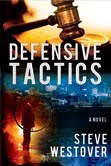
Content- This is the stimulus, or substance of what is meant to elicit the emotion. Maybe it’s the tragic death of family, or a child, or the pain of unrequited love. Maybe it’s the fear caused by physical danger or emotional distress. In Defensive Tactics, Jimmy faces each of these emotional situations as he overcomes the tragic loss of loved ones. He finds himself in physical danger when he is unwittingly drawn into the heat of an FBI investigation. The themes must be broad enough to appeal to a large audience but feel personal enough to help the reader empathize and relate.
Conflict- This is the turmoil and tension created by the emotional situation. This drives the story forward and grips the reader by the throat to let them know, “You’d better keep reading. You can’t stop now.” This prompts us to read on so we can find out what happens to Jimmy.
Context- The emotion must advance the story, not act as a distraction. The emotional situation has to fit into the action of the story and not serve only itself. It needs to mean something in the larger scheme of things. How does the fear of physical harm move the reader? How does the understanding of Jimmy’s tragic past make us care about his future? How do we allow a glimmer of hope to penetrate the gloom of Jimmy’s life?
Character- If we don’t care about the character, we don’t care about the story. If I don’t feel a connection or have an emotional investment in the individual, I won’t care about what happens to him. I won’t tear up when he sits alone in a chapel, staring comatose at an infant casket and I won’t cheer for him when he starts caring for others more than himself. I must be able to invest in the character enough that I will invest my emotion in his story.
These 4 C’s must weave together, binding the reader to the story. Hopefully at the end, the reader will think about the characters and maybe even apply a lesson or two to their own lives. Hopefully, we will leave the reader feeling an emotional connection to the story so that the next time someone asks them if they’ve read any good books lately, they’ll remember ours.
In lending we determine an individual’s credit worthiness based on the 3 C’s: Capacity (ability to repay), Collateral (security), and Character (the likelihood that someone will repay- i.e. credit history). Today I’d like to refer the 4 C’s of writing with emotion. Perhaps we can evaluate the emotional worthiness of our work to make sure we pack the emotional punch we intend in connecting with our readers.
How do we convey the emotion that we want our reader to experience? Answer: the 4 C’s.
Content- This is the stimulus, or substance of what is meant to elicit the emotion. Maybe it’s the tragic death of family, or a child, or the pain of unrequited love. Maybe it’s the fear caused by physical danger or emotional distress. In Defensive Tactics, Jimmy faces each of these emotional situations as he overcomes the tragic loss of loved ones. He finds himself in physical danger when he is unwittingly drawn into the heat of an FBI investigation. The themes must be broad enough to appeal to a large audience but feel personal enough to help the reader empathize and relate.
Conflict- This is the turmoil and tension created by the emotional situation. This drives the story forward and grips the reader by the throat to let them know, “You’d better keep reading. You can’t stop now.” This prompts us to read on so we can find out what happens to Jimmy.
Context- The emotion must advance the story, not act as a distraction. The emotional situation has to fit into the action of the story and not serve only itself. It needs to mean something in the larger scheme of things. How does the fear of physical harm move the reader? How does the understanding of Jimmy’s tragic past make us care about his future? How do we allow a glimmer of hope to penetrate the gloom of Jimmy’s life?
Character- If we don’t care about the character, we don’t care about the story. If I don’t feel a connection or have an emotional investment in the individual, I won’t care about what happens to him. I won’t tear up when he sits alone in a chapel, staring comatose at an infant casket and I won’t cheer for him when he starts caring for others more than himself. I must be able to invest in the character enough that I will invest my emotion in his story.
These 4 C’s must weave together, binding the reader to the story. Hopefully at the end, the reader will think about the characters and maybe even apply a lesson or two to their own lives. Hopefully, we will leave the reader feeling an emotional connection to the story so that the next time someone asks them if they’ve read any good books lately, they’ll remember ours.
What books have you invested in emotionally?
Book Review: StarScout Rising by Gary Darby

There is no question about it. Star Scout Rising: First Trail by Gary Darby is hard core science fiction. This book is exactly what it claims to be.
.
You'll get a good feel for the book by reading the blurb on the back cover:
.
"The thundering acid tsunami raced towards Del as he tried in vain to pilot his damaged scouter out of its path. Tremors ran through the ship as it lost altitude and speed. Del had only one option, to dive the craft deep into the lake of acid ahead of the wave. Del glanced at his controls and wondered, 'would the bulkheads hold when the scouter slammed into the lake surface? Did the little ship have enough juice to power through the thick goo?'
.
Del didn't know. He only knew he had but one chance to save his ship and his comrades. With one final look back at the speeding swell, Del tipped the nose of the scouter over in a downward arc toward the orange liquid and the dark depths below."
.
This book is filled with creative details of space exploration and political intrigue as well as heroic rescues and tests of loyalty to friends and comrades. It has villains to despise and heroes to admire. I congratulate Mr. Darby on publishing this first volume of the planned Star Scout Trilogy. It is a monumental feat to complete a first novel and I wish him great success.
.
Having said that, I do have reservations about the book. I consider myself a sci-fi fan but maybe not hard core enough to fully enjoy this book. While I appreciate the intricacies of the plot and character development, as well as the clean reading it provides, I found parts of the action to be over the top and some of the elements to be a bit familiar. This very well could be more a reflection on the reader than the work. I would recommend this book to the die hard sci-fi enthusiast. To the casual sci-fi reader like me, expect to dive in to the deep end of hard core sci-fi entertainment.
.
You can purchase StarScout Rising here.
.
Best of luck Gary.
.
Disclaimer: I received a review copy of this book from the author.
Tuesday, March 15, 2011
Music That Makes Me Feel Something!
Yesterday as I was driving in the car with my daughter, a GREAT song came on the radio. She immediately reached over to change the channel but I wouldn't let her. I told her that this is one of my Top 10 favorite songs of all time. That got me thinking about why it was one of my Top 10 favorite songs. There is a lot of great music. What is so special about this song? Do my other favorites share a commonality? The answer is yes. Each song makes me feel something emotionally.
I love music! It touches my heart in a way few things can. In high school I was very involved in choirs and in college this morphed into writing music. I write lyrics that mean something to me and I put them to a melody that matches the story and sentiment. Then I try to figure out how to play it on the piano or guitar. I play and sing the words that I wrote and remember the emotion I was feeling at the time I wrote the lyrics.
The music of my favorite artists penetrates deep and I greatly appreciate the skill with which they share their feelings about loss or pain, hope, redemption, love, dreams and heartache. Here are a few of my favorites.
Steve's Top 10
Fire and Rain.............................................James Taylor
Don't Let the Sun Go Down on Me.........Elton John
Let It Be.................................................... Beatles
The Dance................................................. Garth Brooks
Redemption Song..................................... Bob Marley
Everybody Hurts..................................... REM
Goodnight Saigon..................................... Billy Joel
I'm Not Ready to Make Nice.................. Dixie Chicks
Dream On................................................. Aerosmith
The Story................................................. Brandi Carlile
*One Day More....................................... Les Miserables (Honorable Mention)
Undoubtedly, your favorites will be different. What music touches you?
FYI- Most of these can be found on my playlist at the bottom of the blog.
I love music! It touches my heart in a way few things can. In high school I was very involved in choirs and in college this morphed into writing music. I write lyrics that mean something to me and I put them to a melody that matches the story and sentiment. Then I try to figure out how to play it on the piano or guitar. I play and sing the words that I wrote and remember the emotion I was feeling at the time I wrote the lyrics.
The music of my favorite artists penetrates deep and I greatly appreciate the skill with which they share their feelings about loss or pain, hope, redemption, love, dreams and heartache. Here are a few of my favorites.
Steve's Top 10
Fire and Rain.............................................James Taylor
Don't Let the Sun Go Down on Me.........Elton John
Let It Be.................................................... Beatles
The Dance................................................. Garth Brooks
Redemption Song..................................... Bob Marley
Everybody Hurts..................................... REM
Goodnight Saigon..................................... Billy Joel
I'm Not Ready to Make Nice.................. Dixie Chicks
Dream On................................................. Aerosmith
The Story................................................. Brandi Carlile
*One Day More....................................... Les Miserables (Honorable Mention)
Undoubtedly, your favorites will be different. What music touches you?
FYI- Most of these can be found on my playlist at the bottom of the blog.
Wednesday, March 9, 2011
Ugly Characters Rock!


Recently I did a blog post about female characters we love. I enjoy sassy, strong willed, intelligent, creative, feisty female characters like Veronica Mars. This got me thinking about male characters I enjoy and I realized I like ugly characters. I don't know why but the uglier, the better.
Case 1- Guerrero from TV's Human Target played by Jackie Earle Haley. I don't mean to denegrate the man because of his looks, but...he's no Christopher Chance and that's the way I like it.
Like the female characters I mentioned, Guerrero has an uncanny ability to do whatever it takes to get the job done. He is super tough, sarcastic and can even be cruel. Even though he's a small man, I do not doubt for a second that he would bury me in a heartbeat if I crossed him, yet he's loyal to those he respects. If I were to create my own justice league of non-super tough guys, Guerrero would be on my team.
.
Guerrero is complicated. He runs on both sides of the law and is ethically challenged, yet he is consistent within his own morality.
Case 2- Ron Howard's Brother (AKA Clint Howard)
In case you think I am being rude, in the credits for The Waterboy, Clint's acting credit is listed as "Ron Howard's brother".
This is an ugly man, but I mean that lovingly. His unusual appearance, just like Guerrero, adds depth and reality to the characters he portrays. Not everyone can look like George Clooney or Brad Pitt (thank goodness- though some female readers may disagree), but I love that he is comfortable in his own skin. Not every man should be a leading man, but every character should add layers, contrast and conflict to a story.
These ugly characters do just that.
.
When we write our characters, I hope we make them unique in some way. Not every person in the world is beautiful. Every character we write should be interesting in some way, but they don't have to be a gorgeous movie star, because even some movie stars are ugly.
.
What characteristics do you appreciate in male characters?
Friday, March 4, 2011
Portrait of A Mother- By Michael Young

Back a number of months ago, Cedar Fort Publishing ran a contest to find a short story for a Mother's Day booklet they are releasing this year. I thought this was a wonderful idea so I spent time mulling over some ideas that I would like to write. I never did write my story but that's okay because Michael Young wrote one and I love it.
.
Michael was announced as the winner of the contest and the short story is ready for release on March 8, just in time for Mother's Day. For $2.99 (less than the price of many greeting cards) you can purchase this beautiful short story in a lovely booklet. The story is sweet and really shares the feelings we all have for our mothers. Your mother will truly appreciate it.
.
You can pre-order Portrait of A Mother here.
.
For more information about Michael Young and his last novel, The Canticle Kingdom, check out the review and interview I did with him back in November. He is a very interesting and talented guy.
.
You just can't go wrong buying this as a gift for your mother this year.
Wednesday, March 2, 2011
T= r(eliability) + d(elight)

We all know that trust is hard to earn but easy to lose, kind of like money. Without trust, society plummets into chaos so it is important to build and maintain relationships of trust.
.
Why would we work if we didn't trust that we would be paid by our employer for our effort? Why would we marry if we didn't trust our spouse to be loyal and loving? Why would we invest our time in an activity if we didn't trust that we would find some value? The answer to these questions is...We Wouldn't and We Don't.
.
Another way of saying we don't "trust" someone or something, is saying that we don't "believe" they will do what they say they will do. We base these judgements on our own experience and the trusted experience of others. If I work at my job and my paycheck bounces, I have lost trust in my employer because I don't believe my employer is reliable enough to pay me. I don't believe I will experience the benefit from the work. At this point it may be difficult to rebuild my trust in that employer. If it is possible to regain trust it will take time and consistent demonstration from that point on that I will be paid on time and my check will not bounce.
.
Trust also plays a role in how we choose our media, be it books, TV, movies, music or internet news. Let me share a simple formula for trust that I recently came across.
.
TRUST=r+d
.
r is Reliability and d is Delight
.
Maybe this is too simplistic but lets take a look. If I value reading books that don't glorify inappropriate sexual relationships, foul language or excessive violence and gore I will seek out those kinds of books from sources I trust. I will trust those sources because they have demonstrated to me that they are reliable in their clean content and I will delight in reading a story that jives with my moral sensibilities. Through my personal experience and the experiences of others who I place my trust in, I believe that I can find good, clean reading through publishers and writers that cater to the LDS audience. If I were to purchase a book from a trusted publisher or author and found graphic sex, language and violence in that book, the trust would be broken. If, after a period of time I found them to be reliable again so I could delight in the reading, my trust in them would be restored.
.
In business we call this "Know your customer" and in writing we would call it "Know your audience". "Trust comes from meeting and beating customer expectations." We must know who we are writing for. We must know what their expectations are and we must be consistent in both the quality of the story we tell and the content with which we tell it. If we fail to meet the expectations of our readers we will lose their trust.
.
I used the example of clean, PG rated reading as something I value and expect but in every aspect of writing we can either build or destroy trust. We can build trust through our style, language, plot strength, believability of characters, so on and so forth.
.
As we prove ourselves to be reliable in providing quality, well-crafted stories that are clean and appropriate we will bring delight to our readers. When the reader delights in our book they will seek out our next book. They will return to our publisher for similar books and we will have established a valuable relationship of trust.
.
What can an author do to gain the trust of his reader?
Has an author ever lost your trust? How or why?
.
Why would we work if we didn't trust that we would be paid by our employer for our effort? Why would we marry if we didn't trust our spouse to be loyal and loving? Why would we invest our time in an activity if we didn't trust that we would find some value? The answer to these questions is...We Wouldn't and We Don't.
.
Another way of saying we don't "trust" someone or something, is saying that we don't "believe" they will do what they say they will do. We base these judgements on our own experience and the trusted experience of others. If I work at my job and my paycheck bounces, I have lost trust in my employer because I don't believe my employer is reliable enough to pay me. I don't believe I will experience the benefit from the work. At this point it may be difficult to rebuild my trust in that employer. If it is possible to regain trust it will take time and consistent demonstration from that point on that I will be paid on time and my check will not bounce.
.
Trust also plays a role in how we choose our media, be it books, TV, movies, music or internet news. Let me share a simple formula for trust that I recently came across.
.
TRUST=r+d
.
r is Reliability and d is Delight
.
Maybe this is too simplistic but lets take a look. If I value reading books that don't glorify inappropriate sexual relationships, foul language or excessive violence and gore I will seek out those kinds of books from sources I trust. I will trust those sources because they have demonstrated to me that they are reliable in their clean content and I will delight in reading a story that jives with my moral sensibilities. Through my personal experience and the experiences of others who I place my trust in, I believe that I can find good, clean reading through publishers and writers that cater to the LDS audience. If I were to purchase a book from a trusted publisher or author and found graphic sex, language and violence in that book, the trust would be broken. If, after a period of time I found them to be reliable again so I could delight in the reading, my trust in them would be restored.
.
In business we call this "Know your customer" and in writing we would call it "Know your audience". "Trust comes from meeting and beating customer expectations." We must know who we are writing for. We must know what their expectations are and we must be consistent in both the quality of the story we tell and the content with which we tell it. If we fail to meet the expectations of our readers we will lose their trust.
.
I used the example of clean, PG rated reading as something I value and expect but in every aspect of writing we can either build or destroy trust. We can build trust through our style, language, plot strength, believability of characters, so on and so forth.
.
As we prove ourselves to be reliable in providing quality, well-crafted stories that are clean and appropriate we will bring delight to our readers. When the reader delights in our book they will seek out our next book. They will return to our publisher for similar books and we will have established a valuable relationship of trust.
.
What can an author do to gain the trust of his reader?
Has an author ever lost your trust? How or why?
Thursday, February 24, 2011
Defensive Tactics- Review by Mary Walling

Check out Mary's review of DEFENSIVE TACTICS. I appreciate her taking the time to write this. Here are a couple of my favorite lines from her review.
"In this suspense filled novel, you will meet a cast of characters that you will either love or dislike. They will make you laugh, bring a tear to your eye or make you angry."
"Once I was able to sit down and give the book my complete attention, I could not put it down. I finished it in 2 nights and would recommend it to everyone who enjoys a good suspense filled book."
Thanks Mary. Read the full review on her BLOG.
Subscribe to:
Comments (Atom)