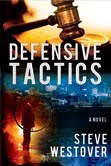
Showing posts with label Defensive Tactics. Show all posts

Thursday, September 8, 2011

Every Note Matters- In Writing Too


I LOVE the musical Les Miserables. It is a fantastic play based on a wonderful book. My kids all know the music because I play it often. The music enhances the story of despair and redemption and is a real treat to watch live. I am absolutely a fan.


With that said, I was recently enjoying a Broadway cast recording and I was really disappointed by one of the characters, Fantine.


Fantine lived a difficult life. She worked in a factory and paid an innkeeper to watch after her daughter, Cosette, because she couldn't afford to keep her. She sings I Dreamed A Dream about how her hopes had been crushed. It is a beautiful song, but on this particular recording the feeling of despair was overridden when I almost chuckled in a couple of parts. Why did I lack such sensitivity? There were certain notes that just didn't resonate. On the line "But he was gone when au-TUMN CAME," Fantine sounded less like a jilted lover and grieving mother and more like a thick accented Russian Soldier. Her focus was so centered on the the wrong syllables that the moment was lost. The rest of the song was wonderful, but those two ending notes ruined the song for me and now I can't listen to it without anticipating those two disturbing notes.


Perhaps I'm being too harsh, but I don't think so. Later, Fantine has a dramatic death scene where she sings Come To Me, begging Valjean to take care of her daughter. Again, a beautiful song, with just a couple discordant notes. At the very end of the scene she sings, "Tell Cosette I love her and I'll see her when I WAKE!" And then she died. Huh? Even though she was the one dying, she hammered the last note in such a way that I wish I would be put out of my misery.


So what's the point to criticizing this one version of these two beautiful songs? Simple-It doesn't take much to pull the consumer, whether he be a listener, a viewer, or a reader, out of the moment and destroy the valuable setting, mood or character you have been developing.


Just like every note matters to the listener, every word matters to the reader.


One simple example: In my first book, Defensive Tactics, the scene was set at night in downtown Kansas City. The beautiful and refined heroin was under distress and she "hollered" something to her approaching rescuers. "Hollered" just didn't fit. She wasn't going to a hoe-down at Uncle Bart's barn so based on her character, location and situation, "Hollered" was the wrong word and pulled the reader out of the story. I had a couple of people comment on this prior to the final printing so I made the change and "yelled" and "screamed" worked better. That one discordant word could have pulled the reader out of the story just long enough to scratch their head. Was it a huge deal? Probably not, but I don't want to leave my reader with a bad impression, like "WAKE" did for me.


By the way, did you notice, and were you annoyed that I said the "heroin" instead of the "heroine"? Simple things can be a distraction.


Here is a link to I Dreamed A Dream, the way it should be.


And click here to hear a good version of Come To Me.


Monday, August 8, 2011

Defensive Tactics- Anniversary


One year ago today my first novel, Defensive Tactics, was released by Cedar Fort Publishing. In the past year I have learned a lot and accomplished a number of things.


1- Since then I have written a mid-grade fantasy called Crater Lake: Battle for Wizard Island that is set to be released in March 2012. Crater Lake is an adventure set at pristine Crater Lake in the Oregon Cascades. When an evil spirit chief causes all the adults at Crater Lake to be sucked into the ground, Ethan must race to free them before their fate is sealed permanently.


2- I am almost finished with the sequel to Defensive Tactics. I hope to be ready to submit for approval and publication within the next month or two. The working title is Mormon Gold. This story follows Jimmy, Paul and Emily on another FBI investigation when kids from a youth group go missing on a church history trek.


There have certainly been some ups and downs. My patience has been tested as I have worked to become a better writer and I learn about the publishing business.


Overall it has been a great year. Everyone always asks how Defensive Tactics is selling and I usually reply "Eh..." Numbers haven't been great but for a first time author with no following, publishing contacts or knowledge of the industry, whose book was accepted and printed within 4 months with no time for advertising or marketing from the publisher, for an author with no understanding of marketing or his role in helping to sell the book, I am very satisfied. I've learned a lot from mistakes I've made that I hopefully will not repeat. I've met TONS of great new authors online who are supportive and have excellent knowledge to share.


I am excited for my next release in March and hope to have a quick release on Mormon Gold shortly after that. This has been a great year and I look forward to increased future sales.

Wednesday, March 16, 2011

The 4 C's of Writing Emotion


I’ve recently been thinking about favorites. What makes a book one of my favorites? Why do I like a particular movie better than all others and what makes a song something I need to hear over and over. As I’ve created lists of favorite movies, books and songs lately I’ve realized that in each case, the book, the movie or song speaks to me and touches my emotions. It tells me a story and makes me feel something. Maybe it reminds me of a pain I’ve felt or makes me laugh at something stupid I’ve done. But ultimately, if I’m going to reread, re-watch or re-listen, I want to feel good at the end. This doesn’t mean everything needs to end perfectly in a utopian world with kittens and unicorns, but after being reminded of the sting of life I want to feel hope that things can be better and that even the most challenging struggles can be overcome. Some people prefer tragedies but I prefer hope.

In lending we determine an individual’s credit worthiness based on the 3 C’s: Capacity (ability to repay), Collateral (security), and Character (the likelihood that someone will repay- i.e. credit history). Today I’d like to refer the 4 C’s of writing with emotion. Perhaps we can evaluate the emotional worthiness of our work to make sure we pack the emotional punch we intend in connecting with our readers.

How do we convey the emotion that we want our reader to experience? Answer: the 4 C’s.

Content- This is the stimulus, or substance of what is meant to elicit the emotion. Maybe it’s the tragic death of family, or a child, or the pain of unrequited love. Maybe it’s the fear caused by physical danger or emotional distress. In Defensive Tactics, Jimmy faces each of these emotional situations as he overcomes the tragic loss of loved ones. He finds himself in physical danger when he is unwittingly drawn into the heat of an FBI investigation. The themes must be broad enough to appeal to a large audience but feel personal enough to help the reader empathize and relate.

Conflict- This is the turmoil and tension created by the emotional situation. This drives the story forward and grips the reader by the throat to let them know, “You’d better keep reading. You can’t stop now.” This prompts us to read on so we can find out what happens to Jimmy.

Context- The emotion must advance the story, not act as a distraction. The emotional situation has to fit into the action of the story and not serve only itself. It needs to mean something in the larger scheme of things. How does the fear of physical harm move the reader? How does the understanding of Jimmy’s tragic past make us care about his future? How do we allow a glimmer of hope to penetrate the gloom of Jimmy’s life?

Character- If we don’t care about the character, we don’t care about the story. If I don’t feel a connection or have an emotional investment in the individual, I won’t care about what happens to him. I won’t tear up when he sits alone in a chapel, staring comatose at an infant casket and I won’t cheer for him when he starts caring for others more than himself. I must be able to invest in the character enough that I will invest my emotion in his story.

These 4 C’s must weave together, binding the reader to the story. Hopefully at the end, the reader will think about the characters and maybe even apply a lesson or two to their own lives. Hopefully, we will leave the reader feeling an emotional connection to the story so that the next time someone asks them if they’ve read any good books lately, they’ll remember ours.

What books have you invested in emotionally?

Thursday, February 24, 2011

Defensive Tactics- Review by Mary Walling


Check out Mary's review of DEFENSIVE TACTICS. I appreciate her taking the time to write this. Here are a couple of my favorite lines from her review.

"In this suspense filled novel, you will meet a cast of characters that you will either love or dislike. They will make you laugh, bring a tear to your eye or make you angry."

"Once I was able to sit down and give the book my complete attention, I could not put it down. I finished it in 2 nights and would recommend it to everyone who enjoys a good suspense filled book."

Thanks Mary. Read the full review on her BLOG.

Thursday, February 3, 2011

Publisher Interview- Lyle Mortimer of Cedar Fort


Authors write with the dream and hope of having their work published but the dream is often more challenging than expected. Until I published my first novel, Defensive Tactics, I had ZERO understanding of the publishing business and I had NO idea how competitive the market is. In many ways the publisher is the gate keeper, determining what work is given an audience. Are these determinations made based on personal preference? In some ways, sure. But ultimately publishing is a business and the publisher is in business to make money. Makes sense right. Today I have the opportunity to post my interview with CFI Publisher, Lyle Mortimer. I hope this interview can add insight and a touch of understanding for the aspiring author. I appreciate Mr. Mortimer taking the time to answer many of my questions.
Steve: How did you break into the market as an LDS Publisher?
Mr. Mortimer: Very interesting that you should use the words "break in." It kind of intimates a huge breakthrough or some immediate happening.
I've been working in the LDS market for 30 years. After working for a publishing company for six years, I gathered up some pieces of a publishing company and started Cedar Fort, Inc.
Steve: What are the most significant changes to the LDS market in the past ten years?
Mr. Mortimer: The changes that have shaped the market place are the acquisitions of independent publishers by Deseret Book. These include Bookcraft, Excel, Covenant and Seagull as well as many independent LDS stores. During this same period the marketplace has been difficult for independents. In 2006, the number of independents reduced by half.
Steve: Cedar Fort is known for its eye-catching covers and I notice that you do some of the cover designs yourself. Did you receive formal training for this?
Mr. Mortimer: I started doing cover designs in 1988. My design training came from the theatre field and general education in the arts. Computer design did not develop until some years after that when formal training was not available. We took the new technologies and ran with them. We were the first publishing company in Utah, perhaps the nation, to typeset a book on a Macintosh. We were among the first to use computer-aided design as desktop publishing advanced.
Steve: What do you find most rewarding about being a publisher?
Mr. Mortimer: There is nothing more exciting than finding and developing a new author. Our most prolific author has been very loyal to us and his publishing career has been very rewarding for both of us.
Steve: What is the most challenging?
Mr. Mortimer: The most challenging part of publishing is developing business models that work in such a complicated business.
Steve: Would you like to share any goals Cedar Fort has identified for the next 2-3 years?
Mr. Mortimer: Our primary goals for the next ten years are to enhance the careers of established authors. As we review the previous decade we have grown by 6.1 times. We have had an average growth rate of 22% annually. We would like to continue that for the next decade.
Steve: How are e-books changing the landscape in the publishing world (in general) and with Cedar Fort (specifically)?
Mr. Mortimer: E-books will continue to develop and influence the marketplace. In today's world there will always be a place for companies, which can establish relavence. We are gearing all of our future toward those subjects, which have the most relevance to the largest market possible.
Steve: Will CFI consider acquisitions in e-book format only?
Mr. Mortimer: We cannot forsee e-book only releases because we cannot forsee the technology of e-readers. It could be that the technology exists in the next five years.
Steve: Does CFI plan to break into the national market with clean, non-LDS centered fiction?
Mr. Mortimer: CFI did break into the market with LDS oriented fiction a year and a half ago. We intend to continue releases to the national market by nationally recognized authors with LDS background or themes.
Steve: How would you describe the relationship between CFI and the other LDS publishers?
Mr. Mortimer: As individuals working in different companies we are friends, but the companies themselves have no relationship.
Steve: CFI is very good about giving unknown authors a shot at having their work published. Personally, I really appreciate the opportunity. What advice do you have for aspiring authors?
Mr. Mortimer: As mentioned above in CFI's goals, authors must develop relevance. If they have relevance, they will establish an audience. An audience is a market, which results in success if it is large enough.
Steve: What would you most like authors to understand about the publishing industry and Cedar Fort?
Mr. Mortimer: Publishing is a very complicated business and extremely risky. My primary job is to manage risk. The better we manage risk as a company, the more successful we are. With 30 years experience as one of the most solid and fastest growing publishers in the nation, we have a point of view that often doesn't align with the authors way of thinking.
Steve's Closing Thoughts:
I think when we as authors understand that publishing is a business and that we are creating a product for that business to sell, we are better able to understand our role as a partner with the publisher. Every author is different and so is every publisher. For me, understanding this helps me to not take rejection personally. Not only do we need to offer a high quality product to sell, but our manuscripts also needs to be the right product at the right time for our business partner, the publisher.
For example, right now I am trying to find a publisher for my mid-grade fantasy, Crater Lake: Battle for Wizard Island. It has been a frustrating process because I have received so many rejections from Publishers and Agents. It's hard because I feel that the writing is stronger than my first novel and the story is exciting, BUT, yeah the big BUT, until I can find a match for the product and the publisher, it will remain in my computer where only I and my family can read it. It's nothing personal, just business.
One last note- I want to extend a hearty CONGRATULATIONS to our very own Rachael Renee Anderson as a Whitney Awards finalist. And Congrats to all finalists. I aspire to join you one day. Well done everyone!

Wednesday, January 19, 2011

What Kind of Creature Are You?

I am a creature of habit. When I go to my favorite restaurant I usually order the same meal. If I’m daring, I might rotate between two different meals. When I vacation in a certain city, I tend to stay at the same the same hotel. I wake up at the same time every morning, whether I have work or not, and I essentially follow the same routine every day. Sounds a bit boring doesn’t it, but to me it’s comfortable. I like knowing what to expect, but I’ve got to be honest, sometimes it bores me too.

Sometimes I get in a rut and need to shake things up a bit, you know, live a little. So from time to time I’ll get wild and switch my brand of chocolate cupcake or order the Chalupa instead of a Chimichanga. I’m a wild and crazy guy.

I notice I get into similar ruts in my writing. The rut I noticed most recently is that I write everything in 3rd person. There’s nothing wrong with third person. I enjoy reading it and when I envision a story in my mind, I usually view it like I would watch a TV show or movie, which lends itself to 3rd person point of view. But I have to ask myself “Do I dare try something new?” My answer this week, is “yes”!

My first two completed manuscripts, including Defensive Tactics, and my current work in progress are all 3rd person so I decided to shake things up. This week I started another WIP in 1st person POV. I’m the last of the party animals. I have to admit, this new experiment makes me a little nervous. Can I do it? Will it suck rocks? Is it a total waste of my time? The answers are- I don’t know, I don’t know, and NO. I will never know the answer to the first two questions if I don’t try, but regardless of whether it turns into a publishable manuscript or not, my new 1st person WIP is not a waste of my time because it is forcing me to stretch and grow and experiment. So far I love it.

A couple of years ago I started writing Defensive Tactics because I was curious if I could write a novel. It was an experiment. I had never written anything before, unless you count college papers, which I don’t. I wrote my second manuscript, Crater Lake: Battle for Wizard Island because I love adventures and treasure hunts and I wondered if I could write a mid-grade fantasy that my kids would enjoy. My kids love it but the publishing jury is still out. In both cases I took a chance to try something new.

There is comfort and safety in sticking with habit and the familiar, but there can be excitement, challenge and reward in broadening horizons.

I have a couple of questions for you.

1- What kind of a creature are you?
2- What kind of ruts do you get into? Writing? Reading?
3- How do you get out of it?
4- How many WIP do you have going at the same time?

I would love to read your answers and learn from your wisdom.