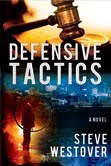
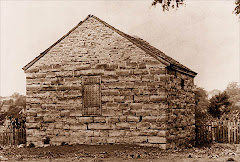
I am happy to announce 2 multi-author events that will be held on Saturday September 24th. The first will be from 10-12 at the Far West Country Book Store near the Far West Temple Site at 2650 NW State Rt. D, Cameron Missouri, 64429. The second will be at the Eden Bookshop at 118A N. Main St. in Liberty from 2-4. There will be something for everyone.
Participating authors include...
-Instructional: Danyelle Ferguson- (dis)Abilities and the Gospel: How to Bring People with Special Needs Closer to Christ
-Children: Leigh Legere- Do Antelope Eat Cantaloupe?
-Docrtinal: Stephen K. Chase- The Second Coming
-YA Suspense: Tamara Hart Heiner- Perilous
-Legal Suspense: Steve Westover- Defensive Tactics
Come meet the authors and have your books signed. It will be a fun morning.
Monday, September 12, 2011


Friday, September 9, 2011
Bravado Vs. Confidence

The NBC/Politico sponsored GOP Debate on September 7th provided opportunities for the Republican Presidential primary candidates to make their case to the country. They had a chance to declare why their leadership would be superior to the current administration and their Republican competitors. There were some good moments in the debate and most of the eight candidates took advantage of the opportunity to attack their rivals.
I know it's early in the political season, but it seems to me that there are two leading GOP contenders, Mitt Romney and Rick Perry. Spoiler Alert: Rick Perry and Mitt Romney don't like each other much. Shocking. Both men have good hair, dress nicely and have both been governors (Rick Perry is currently the Governor of Texas). But placing those superficial elements aside, I want to know who these candidates are. Judging them by what they have done and how they behave is more important to me than judging them by what they say. Talk is cheap and political speak is worth almost nothing.
I want a leader who will fight the good fight for the most worthy causes. I want someone I can believe in even if I don't agree with them 100% of the time. I want someone who is confident and capable, but not arrogant or condescending. That brings me to my question.
What is the difference between Bravado and Confidence?
Bravado: (as defined by the American Heritage Dictionary) Defiant or swaggering behavior. A pretense of courage. A false show of bravery. A disposition toward showy defiance.
Confidence: (as defined by Dictionary.com) Full trust. Belief in the powers, trustworthiness or reliability of a person or thing.
Based on those two definitions, it is clear to me that I want a leader who has confidence in himself and in whom I can place my confidence. Bravado, on the other hand, I don't have much use for.
Of these two candidates, who most exudes Bravado and who most exemplifies confidence? Why?
Thursday, September 8, 2011
Every Note Matters- In Writing Too

I LOVE the musical Les Miserables. It is a fantastic play based on a wonderful book. My kids all know the music because I play it often. The music enhances the story of despair and redemption and is a real treat to watch live. I am absolutely a fan.
With that said, I was recently enjoying a Broadway cast recording and I was really disappointed by one of the characters, Fantine.
Fantine lived a difficult life. She worked in a factory and paid an innkeeper to watch after her daughter, Cosette, because she couldn't afford to keep her. She sings I Dreamed A Dream about how her hopes had been crushed. It is a beautiful song, but on this particular recording the feeling of despair was overridden when I almost chuckled in a couple of parts. Why did I lack such sensitivity? There were certain notes that just didn't resonate. On the line "But he was gone when au-TUMN CAME," Fantine sounded less like a jilted lover and grieving mother and more like a thick accented Russian Soldier. Her focus was so centered on the the wrong syllables that the moment was lost. The rest of the song was wonderful, but those two ending notes ruined the song for me and now I can't listen to it without anticipating those two disturbing notes.
Perhaps I'm being too harsh, but I don't think so. Later, Fantine has a dramatic death scene where she sings Come To Me, begging Valjean to take care of her daughter. Again, a beautiful song, with just a couple discordant notes. At the very end of the scene she sings, "Tell Cosette I love her and I'll see her when I WAKE!" And then she died. Huh? Even though she was the one dying, she hammered the last note in such a way that I wish I would be put out of my misery.
So what's the point to criticizing this one version of these two beautiful songs? Simple-It doesn't take much to pull the consumer, whether he be a listener, a viewer, or a reader, out of the moment and destroy the valuable setting, mood or character you have been developing.
Just like every note matters to the listener, every word matters to the reader.
One simple example: In my first book, Defensive Tactics, the scene was set at night in downtown Kansas City. The beautiful and refined heroin was under distress and she "hollered" something to her approaching rescuers. "Hollered" just didn't fit. She wasn't going to a hoe-down at Uncle Bart's barn so based on her character, location and situation, "Hollered" was the wrong word and pulled the reader out of the story. I had a couple of people comment on this prior to the final printing so I made the change and "yelled" and "screamed" worked better. That one discordant word could have pulled the reader out of the story just long enough to scratch their head. Was it a huge deal? Probably not, but I don't want to leave my reader with a bad impression, like "WAKE" did for me.
By the way, did you notice, and were you annoyed that I said the "heroin" instead of the "heroine"? Simple things can be a distraction.
Here is a link to I Dreamed A Dream, the way it should be.
And click here to hear a good version of Come To Me.
Wednesday, September 7, 2011
Interview with Rod Miller: Author of The Assassination of Governor Boggs

For those of you interested in LDS Church history, I have a special treat for you today.
Rod Miller is the author of the historical novel, The Assassination of Governor Boggs. The book was released in May by Cedar Fort Publishing. I have been reading this book and find it fascinating. I am happy Rod has agreed to answer a few of my questions. Perhaps you will gain some insights into church history as well as the writing process as I did.
Steve: Please tell us something about yourself that you are usually too humble to admit.
Rod: While I am no more intelligent than average, maybe less so, I am pretty well read and have a head full of retained information on a variety of subjects.
Steve: You are a published writer of fiction (short stories and novels), non-fiction and even poetry. What led you to writing and what approach do you take when sitting down to begin a new project?
Rod: Writing has been for me, since junior high school, a way to get things done. I have always approached it in a very practical way—I learned how to spin insufficient information into creditable answers to essay questions on tests, wrote for school newspapers, got a degree in journalism, wanted to write for agricultural magazines. I got sidetracked in college and for a few years afterward into broadcast production, but soon enough ended up back at a typewriter (that’s what we used in the olden days) writing commercials. That led to a long career (still underway) as an advertising agency copywriter. Again, writing to get things done.
It never occurred to me to try “creative” writing. I had no education or training in creative writing and the whole idea seemed foreign to me. But, some fifteen years ago I took a notion to try to write some poems, just to see if I could. Success there led to short fiction and eventually a novel, then some nonfiction. Somewhere along the way I adapted a juvenile novel for the screen for a filmmaker I worked with on commercials, and that became a movie (Bug Off!). I wrote some articles, mostly on assignments that more or less fell into my lap, for cowboy magazines (still doing that), and a bunch of essays on writing poetry. I just sort of jumped into it all, without really knowing, in the sense of being educated, how to do what I set out to do. Getting most everything I wrote published only encouraged me to blunder along, trying new things. Everything (if anything) I’ve learned about writing I learned from reading—whether by osmosis from pleasure reading or by instructional reading on my own.
Like most writers, I suppose my approach starts with an idea. Some ideas seem to lend themselves to poetry, others to fiction, some to nonfiction. I mull it over for quite a while, deciding if I think I can make it work—if I have the necessary information, if I can convey that information in an interesting way. For some reason I am drawn to unusual formats and structures. Very little of what I’ve written, whether fiction or nonfiction, follows a traditional, chronological path, or the normal introduction, exposition, conflict, climax, resolution, conclusion kind of structure. With me, it’s always a jumble of some kind or other, from pulling apart timelines and rebuilding them, to pulling in materials from elsewhere to tell parts of the story, to using multiple voices—anything, it seems, but straightforward storytelling. I can’t say why.
Plotting and character development and all that stuff doesn’t get much attention (which probably shows in my writing), I just sort of let those things happen on their own. Most of my emphasis is on putting words together and trying to write interesting phrases and sentences and paragraphs and so on. I guess that comes from all my years in advertising, where time and space force you into using economical yet powerful language. And, I suppose, that’s why I was first drawn to poetry, where, again, the words matter more than anything.
In any event, I concentrate my effort on making sentences read well, as well as say something. I think good writing inevitably leads to good reading; that if it’s worth saying, it’s worth saying well. I don’t know how successful my approach is, or if I pull it off, but that’s what I set out to do, from poetry to fiction to history to essays to magazine articles to advertising.
Steve: What inspired you to write a novel based on a fictionalized investigation into the attempted assassination of Governor Lilburn Boggs?
Rod: History has interested me for longer than I can remember. I’ve always wanted to know what happened and why. And I am naturally skeptical, which always leads me to multiple sources and a broad-minded view. So much of the Mormon history we see is “celebratory” or “faith promoting.” As a result, we tend to overlook the complexity of history and are satisfied with a simplistic, one-sided version of what happened—a version that sets out to make a point and leads us inevitably toward that conclusion, rather than relating what really went on.
Porter Rockwell has always fascinated me. He was a remarkable man, with extraordinary abilities and strong character. At the same time, he was a capable and cold-blooded killer. Regardless of which side of the law he represented in a given situation, he did not hesitate to do what he believed needed to be done. The shooting of Lilburn Boggs was one of many crimes he was accused of, and remains an unanswered question. There’s usually a good story in an unanswered question.
Like most Mormons, I knew very little about Lilburn Boggs. My knowledge was scant and very one-sided. I knew there had to be more to the man. And, frankly, the more I learned about him the more impressive he became. Certainly, he mistreated the Mormons and his Extermination Order remains one of the most heinous official acts of any government against its citizens in the history of this country. But, there’s always more than one side to a story, and, as one of our leaders once said (to paraphrase loosely), every man is better than his worst sin.
After researching the lives of these two men, the shooting, and all the related events, I decided there wasn’t enough documented material for me, at least, to tell the story in nonfiction. Through fiction, I thought I could take what is known and spin it into an interesting story. Finally, fiction is, many times, a better way to tell the truth than nonfiction, as you can concentrate on truth rather than facts.
Steve: Did you have any “ah ha” moments as you were researching the history for this book?
Rod: While it may not rise to the “ah ha” level, learning about Lilburn Boggs was a revelation. He was a pivotal figure on the Western frontier, accomplished a great deal, was widely respected, an inspiring leader, and a dedicated public servant all his adult life.
Other than that, I had read about the assassination attempt many times over the years in various places, and had studied a good deal of history about the Mormons in Missouri and the attendant difficulties, so most of what I learned I already knew, on some level. The research mostly refreshed my memory, added detail, and filled in the gaps.
Steve: What are the main challenges you faced in writing this form of historical fiction?
Rod: Putting words in the mouths of real people is intimidating. You never want to misrepresent them—not only in what you know they said, but also in what you think they might have said, what motivated them, their attitudes, their beliefs, their influences. Whether it’s well-known figures like Porter Rockwell or Brigham Young, or obscure characters like Bill Boggs or Jacob Harlan, I tried to be careful in speaking for them.
Almost as intimidating is speaking for made-up characters. The few that are sprinkled throughout the book are there to convey information on behalf of people who were no longer available to speak for themselves. Even though the characters are fictional, what they say has to represent the facts and tell some version of the truth.
Steve: How can a reader differentiate the fiction from the fact in this story?
Rod: If I’ve done my job properly, they won’t have to, or want to. While the book includes invented characters, imagined conversations, and dramatic re-creations, it does so only to allow known facts to be presented. To the best of my ability, every incident and event related to the assassination attempt in the book recounted accurately. I’ve tried to tell the story from as many viewpoints as possible, using several characters representing many facets of the history. While each character tells his own version of the truth, which may differ from other versions, each tells the truth as he knows it, based on information I took from available sources. So, while everything in the book may not be “factual” it is, as much as possible, the truth.
Steve: Have you had the opportunity to visit the Missouri Church historical sites? Do you have a favorite?
Rod: Way back in the late sixties I visited Kansas City two or three times for the national FFA convention. The trip included a visit to the Liberty Jail, so I have always had a soft spot for that place. But, on revisiting it while researching this book, I was terribly disappointed in the version of history related there. Terribly one-sided, woefully ignorant of (or deliberately ignoring) documented events, and intentionally forcing a distorted conclusion onto visitors. It’s not that what they tell you is wrong; what they don’t tell you so misrepresents history that it might as well be wrong.
We visited Independence and located some of the places relevant to the book, including finding the location of the jail where Rockwell was held (long since gone) and the Boggs house where the crime was committed. We also wandered around the Temple site and other places in Independence. Just outside Missouri, we visited Kanesville and Winter Quarters and the Visitor Center there. That was the end of a trip along the Mormon Trail, in reverse, across Wyoming and Nebraska. My favorite trail site is the North Platte crossing in Casper, Wyoming. My great-great-grandfather was one of the men from the pioneer company Brigham Young left there to operate a ferry in the summer of 1847.
Steve: What lessons do you draw personally from the Missouri era of church history?
Rod: While there is no disputing the persecution the Saints received there, and no justification for the extent of their mistreatment by the people and the government of Missouri, that troublesome period was not nearly as one-sided as most Mormons believe; beliefs based on limited information gleaned from official sources, but mostly from folklore. I was never told, for instance, about Mormon night riders burning most of three Missouri settlements to the ground, or the theft of a shipment of government arms on the way to militia troops, or intimidation and threats against a judge. In many instances of violence, the Mormons gave as good as they got and were sometimes the instigators. Like most of history, there are many sides to the Missouri story and I grew up hearing only one of them. So, I suppose, the lessons of skepticism and the need for further study were reinforced.
Steve: Governor Boggs and his “extermination order” of 1838 are infamous to members of the Church of Jesus Christ of Latter-day Saints. Will readers gain a better understanding of Lilburn Boggs and his motivations through reading your book?
Rod: Perhaps not about that unfortunate event specifically, as I did not include much about it, it being somewhat outside the scope of the main tale the book tells other than as a motive for the crime. But, I hope readers will get enough of the “Missouri” side of the history to understand something of the situation that existed, and see it from more than one point of view.
Steve: Please tell us about any other projects you have in the pipeline.
Rod: There are a couple of magazine articles in the works for cowboy-type publications, two anthologies that include short stories of mine about the West that are just hitting the market, and I’ve got another short story almost ready to write. A publisher has the manuscript for a short novel of cowboy tall tales under consideration and I hope to get word on that soon. There’s another novel in progress, probably 25% complete, that I am just getting back to. It’s not historical, but pure fiction, using, loosely, the life of biblical King David in a Western setting. I have most of the research and some of the writing done on a work of popular history, recounting important but relatively unknown incidents in Western history. And there’s always poetry—I just had a poem accepted for a forthcoming anthology, and another due to appear in a cowboy magazine. Finally, I’ve completed another essay on writing poetry that will appear on CowboyPoetry.com in the near future.
Over the next few weeks and months I’ll be presenting workshops at the League of Utah Writers annual convention (September 16-17), the Idaho Writers League annual convention (September 23-24), the Writers of the Purple Sage poetry workshop and retreat (October 21-22), the Heber City Cowboy Poetry Gathering and Buckaroo Fair (November 4-5), and I’ll be doing a book signing in Ogden, Utah (December 3).
And, of course, I have to go to work every day and teach Primary every Sunday.
I plan to post my review of this book next Wednesday but in case you can't wait to purchase, please click here to order from Amazon. You can also order online from Borders, Cedar Fort and Deseret Book or of course you can always visit your local LDS bookstore.
Thursday, August 25, 2011
Kansas City Temple- Construction Update
 These are some of my favorite pictures for the Kansas City Missouri Temple Construction Blog.
Construction is on schedule and while we still don't have a firm completion date, we expect open houses and the dedication to take place in early spring 2012.
John W. Hardy has been announced as the President of the Kasnsas City Area Temple.
Temple presidents are called to oversee all activities performed at the temple. They serve voluntarily, usually for a period of several years.


The new Liberty Missouri Stake Center is being costructed next to the temple. We expect to have Stake Conference in the new building in October 2011.
Wednesday, August 17, 2011
I Did The Unthinkable...

Yes, it pains me to admit it, but I actually went to see Cowboys and Aliens last weekend. My gut told me not to do it, but I didn’t listen. I am ashamed of myself. You have my confession and now I will attempt to make amends, to warn others of the pitfalls of this movie, and on a larger level, of failing to follow your own gut feelings. I have learned my lesson, now I hope to share it with you…
When I first saw the trailer for Cowboys and Aliens in the theater months ago, I laughed out loud. I was embarrassed by the volume of my laugh so I looked around, hoping no one noticed. But I was confused. I thought it was a joke because it sounded so absurd and the trailer was pure corn, but I was the only one laughing. (Click here to see my blog post about bad titles) Woops. Lesson learned. But I tucked away in my little brain the thought that I would NEVER see that movie because it would be a pure waste of time and an utter humiliation if anyone knew I had seen it. My trusty gut told me not to do it, but I didn’t listen.
Over time I read a couple of interesting reviews and saw some new trailers that made the premise of the movie seem more appealing. I was gradually being boiled in a pot of water and I wasn’t smart enough to jump out and eventually I succumbed to the pressure.
Here are a couple of my problems with the movie…
1) It was stupid (My first impression was correct- the title was lame, the action cheesy, the writing was weak and the acting questionable at best)
2) The movie was one giant cliché
a. Aliens invade earth to steal our resources (Wow, never heard that one before)
b. A band of mismatched heroes try to save the day (We’ve got the tough guy, the preacher, the ethically challenged tycoon, a kid, a dog and a good looking chick)
c. They made a half-baked attempt to answer deep philosophical questions about redemption and race relations (Seriously? It’s Cowboys and Aliens)
3) The movie was too long. In its defense, I would probably say the movie was too long if it were only 1 ½ hours. I just wanted it to end. As is, it ran a full 2 hours. (Literally, as the very last frame faded to black I found myself wishing it would fade more quickly)
4) There were too many distracting inconsistencies (I was about to share some examples but found it too frustrating)
In short (I know…too late) the only thing redeeming about this movie was the large pile of candy wrappers at my feet when it concluded. Mmm Candy!
So why mention this on a writing blog? Because from a storytelling point of view, these problems I had with the movie can also be problems in our writing.
1) Does our concept pass the smell test?
2) Is our action and dialogue realistic?
3) Do we write using clichés?
4) Are our characters original?
5) Is the length appropriate for the genre?
6) Is the story consistent within the framework we’ve established?
At the end of the day, we have to love what we’ve written. If we find inconsistencies that cause confusion we must assume that others will have an even bigger problem with it. Go with your gut. If you like it, write it. If you write it and it doesn’t turn out as you envisioned, rewrite it or maybe even scrap it.
When you are satisfied with your work, let test readers have a go. What are their honest feelings about the chapter, scene or book? Then ultimately you make the decision about what remains. Go with your gut. It’s your decision and you are the one to live with it.
Tuesday, August 16, 2011
The $50,000 Honesty Lesson
 Nate Smith made the shot of a lifetime. During a half time competition at a hockey game, the 11 year shot a 3 inch puck through a 3 1/2 inch hole 90 feet away. WOW! The reward for making the impossible shot is $50,000. As you might imagine, Nate and his family were extatic. There is just one problem.
The raffle ticket chosen to name the participant was for Nick Smith, Nate's twin brother. Unfortunately, when Nick's name was called, Nick was out of the building and unable to take his shot, so his twin stepped into his place. For fun, Nate donned the helmut, held the puck, and shot. The amazing thing is, he actually made it.
Here's where the story gets REALLY interesting. The next day, the boys father called the contest sponsors to let them know that Nate took the shot, not Nick, thus putting the $50,000 reward in jeopardy. The sponsor stated that legally, the person on the ticket is the only person permitted to take the shot and therefore, the Smith's may forfeit the reward. The insurance company responsible for the payout is reviewing the case.
Pat Smith, the boys father, said telling the truth was "the right thing to do." WOW! WOW! Pat Smith and his boys are willing to risk $50,000 because the wrong twin took the shot. That, my friends, exemplifies true strength of character in a situation that would be easy to rationalize.
Click here to view the video.
So here are the questions.
Would you tell the truth if it would cost you $50,000.
Should the Smith's be awarded the $50,000 prize?
This father is teaching his children a fantastic lesson. I applaud him for it.
Monday, August 8, 2011
Defensive Tactics- Anniversary

One year ago today my first novel, Defensive Tactics, was released by Cedar Fort Publishing. In the past year I have learned a lot and accomplished a number of things.
1- Since then I have written a mid-grade fantasy called Crater Lake: Battle for Wizard Island that is set to be released in March 2012. Crater Lake is an adventure set at pristine Crater Lake in the Oregon Cascades. When an evil spirit chief causes all the adults at Crater Lake to be sucked into the ground, Ethan must race to free them before their fate is sealed permanently.
2- I am almost finished with the sequel to Defensive Tactics. I hope to be ready to submit for approval and publication within the next month or two. The working title is Mormon Gold. This story follows Jimmy, Paul and Emily on another FBI investigation when kids from a youth group go missing on a church history trek.
There have certainly been some ups and downs. My patience has been tested as I have worked to become a better writer and I learn about the publishing business.
Overall it has been a great year. Everyone always asks how Defensive Tactics is selling and I usually reply "Eh..." Numbers haven't been great but for a first time author with no following, publishing contacts or knowledge of the industry, whose book was accepted and printed within 4 months with no time for advertising or marketing from the publisher, for an author with no understanding of marketing or his role in helping to sell the book, I am very satisfied. I've learned a lot from mistakes I've made that I hopefully will not repeat. I've met TONS of great new authors online who are supportive and have excellent knowledge to share.
I am excited for my next release in March and hope to have a quick release on Mormon Gold shortly after that. This has been a great year and I look forward to increased future sales.
Wednesday, August 3, 2011
2 Cool Things- Library & Catalog

Caldwell County is a rural Missouri county rich in LDS Church History. In fact, in 1836 the county was created by the MO State Legislature for the sole purpose of LDS settlement. In late 1838 the LDS population was forced from the State by the infamous Extermination Order issued by Governor Lilburn Boggs.
Since then, the County Seat has moved from Far West to Kingston Missouri. The entire county boasts a population of less than 9000 people. Caldwell County is a small, rural, economically challenged county.
Last year, an initiative sprung up to create the first Caldwell County Library.I sent notice via blog posts and email to various writing friends and LdStorymakers requesting book donations for this library. I have been shocked by the positive response. To date I have received @200 LDS authored fiction and non-fiction titles as well as nearly 2000 other books and movies collected and donated by LDS authors. The Library officially opened in July with a large contingent of LDS literature. Very appropriate for a special county like Caldwell County.
Thank you all for your support.
2- Books and Things Catalog: Cedar Fort announced last night at the LDS BA dinner that they are taking over the Books and Things Catalog. The Books and Things catalog is the Independent LDS Bookstore equivalent of the Deseret Book and Seagull Book Catalogs. Over time, Cedar Fort will make adjustments to the catalog as they explore ways to add articles, author profiles and entertainment news to the listings of releases.
This is great news for Cedar Fort authors. I am excited about this new direction for Cedar Fort Marketing and I think Cedar Fort should be commended for the effort. Instead of begging and pleading for Cedar Fort Books to be accepted into the Seagull and Deseret catalogs, Cedar Fort has their own medium for advertising to bookstores. Fantastic!
Way to go Cedar Fort!
Thursday, July 21, 2011
Follow Up Questions for Kirt Forakis- Marketing Director At Cedar Fort
I appreciate Kirt taking the time to answer the questions I posted yesterday. As I read and prepared the blog I had a few other questions pop into my mind. I asked Kirt if he would answer my follow up questions and he is gracious to answer.
Steve: How is the marketing budget for a project decided? Is there a standard marketing package or is the marketing plan created for each unique project?
Kirt: Each project is a little unique and and we decide as a team what a budget will be. We don’t focus as much towards “how much,” but rather what types of advertising will work for a particular book. Some books will get a budget that is used towards traditional marketing, but it is not as effective as it once was. We would rather focus time and effort on social media. Authors are able to reach hundreds and thousands of people with little or no money spent. Authors can participate in blog tours and interact with followers through Facebook and other types of social media. Authors should not feel bad if they do not get a budget for traditional marketing. In most cases this just means that we feel an author can reach their audience better through social media and face to face interactions. There will need to be a unique marketing plan for each book as well. The type of book will determine the type of blogs an author will want to engage in and so forth.
Steve: What is your philosophy for expending marketing dollars to get CF books into Deseret Book, Seagull and other catelogs?
Kirt: This is a topic that I have not gotten fully involved with and can get back to you later.
Steve: How does Cedar Fort plan to increase marketing and distribution within large chain stores such as Wal-Mart or Costco from regional to national participation?
Kirt: This falls more on our sales team, however as a marketing department we provide our sales team with ammunition. We need to get our sales team anything that will help get books into those chains. This is why we seek for book reviews, press releases, public relation info and more to support a book. If an author has any info, stats or material to help our sales team, we would like the material sent to us. The authors who put in the time to provide ammunition, such as press releases and developing large followings on social media, have a much better chance getting into large chains and selling well.
Steve: Will the marketing department discuss with the author the plans they have regarding the breadth of marketing? (ie LDS bookstores only, or Regional, or national plans)
Kirt: Most books that are LDS can expect to be more regional. There are some LDS books that have an appeal to a larger audience and sometimes we don’t know that until we see a demand for it. As we work with the authors, we will inform them of our efforts and what direction we are moving for their book.
Steve: A while back Mr. Mortimer stated that Cedar Fort plans to offer advances for books that have national appeal. How does this play into Cedar Fort's marketing strategy?
Kirt: If we have a good notion that a book will have a national appeal, we will focus our efforts a little differently. Again, this comes down to what type of book and the audience. We work as a team to form our plan geared towards each book. Online and social media is already national so we would just need to teak what is being done on it a little. As far as traditional marketing, we will consider our options and where the money will be best spent for an individual book.
Conclusion: Hopefully these posts over the last 2 days has shed a little bit of light on the marketing philosophies and workings within Cedar Fort. These interviews may have raised questions for you personally and I encourage everyone who has questions to work closely with their production team at their publishing house so that you are able to gain knowledge and understanding about the business side of publishing and also to ensure that you are satisfied with the end product. It has been nice getting to know Kirt and I appreciate his time and willingness to participate.
Steve: How is the marketing budget for a project decided? Is there a standard marketing package or is the marketing plan created for each unique project?
Kirt: Each project is a little unique and and we decide as a team what a budget will be. We don’t focus as much towards “how much,” but rather what types of advertising will work for a particular book. Some books will get a budget that is used towards traditional marketing, but it is not as effective as it once was. We would rather focus time and effort on social media. Authors are able to reach hundreds and thousands of people with little or no money spent. Authors can participate in blog tours and interact with followers through Facebook and other types of social media. Authors should not feel bad if they do not get a budget for traditional marketing. In most cases this just means that we feel an author can reach their audience better through social media and face to face interactions. There will need to be a unique marketing plan for each book as well. The type of book will determine the type of blogs an author will want to engage in and so forth.
Steve: What is your philosophy for expending marketing dollars to get CF books into Deseret Book, Seagull and other catelogs?
Kirt: This is a topic that I have not gotten fully involved with and can get back to you later.
Steve: How does Cedar Fort plan to increase marketing and distribution within large chain stores such as Wal-Mart or Costco from regional to national participation?
Kirt: This falls more on our sales team, however as a marketing department we provide our sales team with ammunition. We need to get our sales team anything that will help get books into those chains. This is why we seek for book reviews, press releases, public relation info and more to support a book. If an author has any info, stats or material to help our sales team, we would like the material sent to us. The authors who put in the time to provide ammunition, such as press releases and developing large followings on social media, have a much better chance getting into large chains and selling well.
Steve: Will the marketing department discuss with the author the plans they have regarding the breadth of marketing? (ie LDS bookstores only, or Regional, or national plans)
Kirt: Most books that are LDS can expect to be more regional. There are some LDS books that have an appeal to a larger audience and sometimes we don’t know that until we see a demand for it. As we work with the authors, we will inform them of our efforts and what direction we are moving for their book.
Steve: A while back Mr. Mortimer stated that Cedar Fort plans to offer advances for books that have national appeal. How does this play into Cedar Fort's marketing strategy?
Kirt: If we have a good notion that a book will have a national appeal, we will focus our efforts a little differently. Again, this comes down to what type of book and the audience. We work as a team to form our plan geared towards each book. Online and social media is already national so we would just need to teak what is being done on it a little. As far as traditional marketing, we will consider our options and where the money will be best spent for an individual book.
Conclusion: Hopefully these posts over the last 2 days has shed a little bit of light on the marketing philosophies and workings within Cedar Fort. These interviews may have raised questions for you personally and I encourage everyone who has questions to work closely with their production team at their publishing house so that you are able to gain knowledge and understanding about the business side of publishing and also to ensure that you are satisfied with the end product. It has been nice getting to know Kirt and I appreciate his time and willingness to participate.
Wednesday, July 20, 2011
Interview with Cedar Fort Marketing Director- Kirt Forakis
I'd like to welcome Kirt Forakis and thank him for taking the time to answer my questions. He is the new Marketing Director for Cedar Fort Publishing and has important insights into the author and publisher relationship regarding marketing. While this information is specific to Cedar Fort, it may also be useful to others of you working with a different publisher.
Steve: Please tell us something you are normally too shy or humble to admit about yourself.
Kirt: I won Utah state champion in physics and represented Utah in Nationals and was on the Deans list almost every semester in college.
Steve: As Marketing Director, how will your marketing experience strengthen Cedar Fort as a publisher?
Kirt: Cedar Fort wants to get more involved with social media and gorilla marketing and I have seen success using both methods. I will help Cedar Fort expand their marketing avenues using proven methods and creative thinking.
Steve: How has your previous experience prepared you for this new role?
Kirt: First, I love marketing and advertising. It is a passion for me and I never stop learning or trying new ideas. Second, I have a lot of experience. I have used almost every advertising method I can find and have used several different ad campaigns and designs. Tracking is also important to me and I have tracked most the campaigns I have run. I have a good idea of what types of advertising tends to work and what does not. I have experience organizing and managing events, giveaways, websites, social media outlets, design teams, customer service, PR and media relations.
Steve: What is your marketing philosophy?
Kirt: In short, marketing needs to generate results and wow your audience. I believe you need to capture the attention of your audience within a few seconds and from there have a call to action that creates a direct response, preferably a purchase. From there, it needs to be as easy as possible to move from the advertisement or media to the decision making and purchasing phase.
Steve: What should writers expect from the publisher in terms of marketing effort?
Kirt: We will be using our experience and creativity to help authors reach their audience and reach their goals. Authors are the best marketing tools and so our goal is to teach them and give them direction in their efforts. We will work with authors throughout the entire process to help create a marketing plan and other materials that will be useful to make their book successful.
Steve: What should the author do personally to market their work?
Kirt: Everything they can! A publisher can only do so much and go so far. The author holds the keys and can make the difference between an average selling book and a top seller. Authors need to finish two important steps for their book to sell well. First, write a great book and second, do a great job marketing it. We will be producing an author training packet that will outline what an author can and should be doing to market their book that will contain details, examples, tips and screen shoots. Again, we will be here to help along the way and get authors started in the right direction.
Steve: What is your vision for marketing LDS based fiction and non-fiction in the LDS community?
Kirt: This will depend on the demographics for the book. There are several ways to market a book and first you start with “who” you are going to market to. Once you know the “who”, then we can plan the “how”. There are several LDS websites, blogs and social media sites that appeal to certain markets and we will find the ones that work for individual books. We already work with some LDS based media and authors are encouraged to find more places to talk about and discuss there books.
Steve: What is your vision for marketing Non LDS based fiction and non-fiction regionally and nationally?
Kirt: Again, this depends on the “who”. We have several media outlets for national and regional, but the genre of the book with direct the process further. For example, we will focus cookbooks to media that involves cooking in general. The author is advised to seek out any form of media related to their book and contact them. Some will request the publisher to contact them and we will contact corporate in such cases. Using marketing material will help your chances of getting on these media outlets such as reviews and press releases. These items should be thought through and included in the marketing plan.
Steve: What should every author understand about the marketing process at Cedar Fort?
Kirt: First, we need to start getting support material such as reviews, press releases, endorsements and so forth. These will be useful for creating buzz and initial sales. It is good to talk with authors over the phone or in person to make sure we understand each other and establish a good working relationship. Second, we will put together a marketing plan that outlines the “who” and the “how” for the book. It will include an outline and details for dates, goals and possibilities that need explored by the authors and by us. Social media will need to be set up and authors will need to be interactive on them to generate followers. The authors will then start plans for a launch event, book signings and interviews. We are here to help. We will work with corporate and other places where an author can get stuck such as Deseret Book and Barnes and Nobel. Training material is being created as fast as we can and will be a valuable resource for authors for a step by step of the marketing process.
Thanks Kirt. I look forward to seeing the Author Training Packet.
Steve: Please tell us something you are normally too shy or humble to admit about yourself.
Kirt: I won Utah state champion in physics and represented Utah in Nationals and was on the Deans list almost every semester in college.
Steve: As Marketing Director, how will your marketing experience strengthen Cedar Fort as a publisher?
Kirt: Cedar Fort wants to get more involved with social media and gorilla marketing and I have seen success using both methods. I will help Cedar Fort expand their marketing avenues using proven methods and creative thinking.
Steve: How has your previous experience prepared you for this new role?
Kirt: First, I love marketing and advertising. It is a passion for me and I never stop learning or trying new ideas. Second, I have a lot of experience. I have used almost every advertising method I can find and have used several different ad campaigns and designs. Tracking is also important to me and I have tracked most the campaigns I have run. I have a good idea of what types of advertising tends to work and what does not. I have experience organizing and managing events, giveaways, websites, social media outlets, design teams, customer service, PR and media relations.
Steve: What is your marketing philosophy?
Kirt: In short, marketing needs to generate results and wow your audience. I believe you need to capture the attention of your audience within a few seconds and from there have a call to action that creates a direct response, preferably a purchase. From there, it needs to be as easy as possible to move from the advertisement or media to the decision making and purchasing phase.
Steve: What should writers expect from the publisher in terms of marketing effort?
Kirt: We will be using our experience and creativity to help authors reach their audience and reach their goals. Authors are the best marketing tools and so our goal is to teach them and give them direction in their efforts. We will work with authors throughout the entire process to help create a marketing plan and other materials that will be useful to make their book successful.
Steve: What should the author do personally to market their work?
Kirt: Everything they can! A publisher can only do so much and go so far. The author holds the keys and can make the difference between an average selling book and a top seller. Authors need to finish two important steps for their book to sell well. First, write a great book and second, do a great job marketing it. We will be producing an author training packet that will outline what an author can and should be doing to market their book that will contain details, examples, tips and screen shoots. Again, we will be here to help along the way and get authors started in the right direction.
Steve: What is your vision for marketing LDS based fiction and non-fiction in the LDS community?
Kirt: This will depend on the demographics for the book. There are several ways to market a book and first you start with “who” you are going to market to. Once you know the “who”, then we can plan the “how”. There are several LDS websites, blogs and social media sites that appeal to certain markets and we will find the ones that work for individual books. We already work with some LDS based media and authors are encouraged to find more places to talk about and discuss there books.
Steve: What is your vision for marketing Non LDS based fiction and non-fiction regionally and nationally?
Kirt: Again, this depends on the “who”. We have several media outlets for national and regional, but the genre of the book with direct the process further. For example, we will focus cookbooks to media that involves cooking in general. The author is advised to seek out any form of media related to their book and contact them. Some will request the publisher to contact them and we will contact corporate in such cases. Using marketing material will help your chances of getting on these media outlets such as reviews and press releases. These items should be thought through and included in the marketing plan.
Steve: What should every author understand about the marketing process at Cedar Fort?
Kirt: First, we need to start getting support material such as reviews, press releases, endorsements and so forth. These will be useful for creating buzz and initial sales. It is good to talk with authors over the phone or in person to make sure we understand each other and establish a good working relationship. Second, we will put together a marketing plan that outlines the “who” and the “how” for the book. It will include an outline and details for dates, goals and possibilities that need explored by the authors and by us. Social media will need to be set up and authors will need to be interactive on them to generate followers. The authors will then start plans for a launch event, book signings and interviews. We are here to help. We will work with corporate and other places where an author can get stuck such as Deseret Book and Barnes and Nobel. Training material is being created as fast as we can and will be a valuable resource for authors for a step by step of the marketing process.
Thanks Kirt. I look forward to seeing the Author Training Packet.
Wednesday, July 6, 2011
Spurt Writing
I sometimes find that I don't spend the time writing that I ought to. A day will go by and then two. Then a week, three weeks, a month. Yikes. Maybe the rest of you aren't slackers like I am, but time can easy float by without any writing accomplishments. Why is this? I want to write. I like to write. How can I let so much time pass without writing? There are a couple of simple answers.
1- Life is busy. Shocker! It doesn't feel like I have enough time to make meaningful progress on my WIP. I am a slow reader and a slow writer and I need a significant period of time to commit. I can't sit down for 20 minutes and knock out a page on my WIP and then get back to my other activities. It just doesn't work for me.
2- I lose focus and get out of practice. Then I start procrastinating because I know it will take even longer to get into the flow of writing my scene.
3- I don't feel creative. Maybe my creative energies are spread too thin. My well is only so deep and I have already depleted my creative juices at work, church, family etc. Do you ever feel this way?What can we do about it?
Spurt Writing- short writing periods of 5-10 minutes. What are the benefits of Spurt Writing?
1- It is easy to find 5-10 minutes as opposed to a 2 or 3 hour block of time to write. If I don't have enough time to spend on my WIP then I can spend a shorter period of time writing something else. Anything else.
2- It allows me to stay fresh and in practice in organizing my thoughts by observing and describing what I see or feel. Short spurts help me to avoid long writing haituses. Instead of writing on my WIP I can spend 5 minutes describing how to fold a paper airplane out of the brochure on my desk. I can describe the taste of a sour Skittle. I can describe the smell of the berry hand sanitizer that glopped onto my shirt.
3- Writing helps me generate creativity. I often start writing with no clue whatsoever what I want to write. Once I start writing the scene or character takes on a life of its own. If you don't know where to start, begin with a "what if?" senario and see what happens.
As writers we must organize our thoughts and find interesting ways to describe the world we are creating. We can practice this even when we can't write. If there is no keyboard around and you don't want to waste your time scribbling something down because you know you won't be able to read it later, and you haven't had a chance to write today, spend 5 minutes describing OUT LOUD the way your body feels as you're working out. Describe the pain, exhaustian, exhiliration. Describe out loud the way the leaves flutter in the wind or the muggy dampness of the air you're breathing. Speaking often helps me find the proper rhythm.
If you find you are not spending the amount of time writing you would like, start with the short spurt. Take 5 minutes and describe simple things at your home, or in your garden, or thoughts that pop into your mind as you hear a verdict in a high profile murder case, or the emotions you feel when a driver cuts you off in traffic. It can be anything.
For me, this helps. Fine, I don't have time to write a chapter today, or even this week. There's no use beating myself up about it. But maybe something I describe in my Spurt Writing will spark some creativity and find its way into a later work.
1- Life is busy. Shocker! It doesn't feel like I have enough time to make meaningful progress on my WIP. I am a slow reader and a slow writer and I need a significant period of time to commit. I can't sit down for 20 minutes and knock out a page on my WIP and then get back to my other activities. It just doesn't work for me.
2- I lose focus and get out of practice. Then I start procrastinating because I know it will take even longer to get into the flow of writing my scene.
3- I don't feel creative. Maybe my creative energies are spread too thin. My well is only so deep and I have already depleted my creative juices at work, church, family etc. Do you ever feel this way?What can we do about it?
Spurt Writing- short writing periods of 5-10 minutes. What are the benefits of Spurt Writing?
1- It is easy to find 5-10 minutes as opposed to a 2 or 3 hour block of time to write. If I don't have enough time to spend on my WIP then I can spend a shorter period of time writing something else. Anything else.
2- It allows me to stay fresh and in practice in organizing my thoughts by observing and describing what I see or feel. Short spurts help me to avoid long writing haituses. Instead of writing on my WIP I can spend 5 minutes describing how to fold a paper airplane out of the brochure on my desk. I can describe the taste of a sour Skittle. I can describe the smell of the berry hand sanitizer that glopped onto my shirt.
3- Writing helps me generate creativity. I often start writing with no clue whatsoever what I want to write. Once I start writing the scene or character takes on a life of its own. If you don't know where to start, begin with a "what if?" senario and see what happens.
As writers we must organize our thoughts and find interesting ways to describe the world we are creating. We can practice this even when we can't write. If there is no keyboard around and you don't want to waste your time scribbling something down because you know you won't be able to read it later, and you haven't had a chance to write today, spend 5 minutes describing OUT LOUD the way your body feels as you're working out. Describe the pain, exhaustian, exhiliration. Describe out loud the way the leaves flutter in the wind or the muggy dampness of the air you're breathing. Speaking often helps me find the proper rhythm.
If you find you are not spending the amount of time writing you would like, start with the short spurt. Take 5 minutes and describe simple things at your home, or in your garden, or thoughts that pop into your mind as you hear a verdict in a high profile murder case, or the emotions you feel when a driver cuts you off in traffic. It can be anything.
For me, this helps. Fine, I don't have time to write a chapter today, or even this week. There's no use beating myself up about it. But maybe something I describe in my Spurt Writing will spark some creativity and find its way into a later work.
Wednesday, June 22, 2011
SERENITY NOW!

Happy Gilmore sometimes lacks patience and self-control. When he gets frustrated he punches out game show hosts, throws clubs and attacks alligators but when he needs to focus on an important task like making a winning put, he thinks of his “happy place.” He envisions little people riding stick horses. He lounges on a hammock while his grandmother wins oodles of money at the slot machines. His “happy place” calms him down and helps him focus by regaining a proper perspective about what he wants most.
George Castanza attempted a similar retreat into the happiness of his mind by meditating and calmly saying “serenity now” when he felt distress. He was not quite as successful as Happy. Pity.
As a writer I sometimes feel frustration and perhaps even distress from time to time. Usually, these moments occur as I struggle to remain patient. I have been learning to be more patient with myself as I write and edit, and re-edit and re-edit. Patience is also required during the weeks and even months of waiting during the query process. Then, once the manuscript is accepted it is more waiting, often for a year or longer until the book is released. Although these long, painful delays are a natural part of the writing and publishing process I must remind myself that patience is a necessary attribute for any writer.
The other night we had 2 kids playing in 3 baseball/softball games. My son’s team ended up losing 18-3 but mercifully the game ended early. I watched error after error. I felt like yanking my brain out of my head by the roots of my hair, but instead I sat back, took a deep breath and muttered “serenity now.”
Next I headed over to my daughter’s softball games. This is her first year of softball and the pitchers consistently walk batter after batter, usually allowing the maximum of 6 runs each inning, nearly all runs scored by walks. UGH! Seriously. “SERENITY NOW!”
While I am very proud of my nine year old scoring four times on walks, three hours of watching a double-header gave me a bit of a headache. At moments I sat back and closed my eyes and imagined my “happy place.” I imagined a place where the pitches don’t roll over the plate and the batters occasionally swing. Then I thought of Peanut Butter M&M’s. Mmmm. Then I thought about a plot point in my WIP I’ve been stuck on for a couple of weeks. Then I thought about my hopes for my next release and dreamt about pie in the sky scenarios for wild success. Ahh…”serenity now.”
After calming down I regained perspective on what matters most. I watched and cheered with every new walk and I went crazy every time someone swung the bat. I remembered how thankful I am for my family and the blessing it is to sit in the sun and watch my kids have fun. I reminded myself that proper perspective and patience is critical in every aspect of life. Writing is no different.
Remember, when the agent or publisher has been holding onto your manuscript for three months and you haven’t heard a word from them, “serenity now.” It’s going to be okay. Be patient, go to your “happy place” and keep busy writing on your next WIP. Life is good so don’t stress the wait.
Wednesday, June 15, 2011

WARNING: This may seem REALLY stupid...but I'm fine with that.
Cedar Fort recently accepted my 2nd novel, Crater Lake: Battle for Wizard Island and it is set to release in March of 2012. Naturally I'm thrilled. This is a mid-grade fantasy set at Crater Lake in the Oregon Cascade mountains.
I've been thinking about the importance of Crater Lake to my novel. It really couldn't be set any place else. There are so many facinating details about Crater Lake that bring life to the story. Wizard Island really is a small volcano sticking out of the water of the crater which was created by the collapse of a massive volcano 7700 years ago. There really is a rock structure in the lake called the Phantom Ship. There really is a place called Danger Cove. These real settings create a realism within the story that allows me greater latitude in building the mythology of my fantasy world. Without the realism and consistency, even in a fantasy world, the story will fall flat.
I recently went to a wax museum with my family. Yes, it was a little creepy but I found myself evaluating each wax figure for authenticity. I had my picture taken next to Angelina Jolie and Jessica Alba (much to my wife's chagrin) and even through the craftsmanship of the wax figures was impressive, they didn't look real. The figures didn't look right and therefore were not believable. So I had my picture taken next to Pamela Anderson and David Hasselhoff. Guess what--same problem. But then I got my picture taken next to Danny Devito as the Penguin from Batman. Wow. That was a chilling and believable depiction.
So what does a wax museum have to do with a fantasy world set at Crater Lake? In both cases believability matters...alot. The moment I start pointing out problems with the wax figure or the setting of the novel, the magic is gone. The experience becomes empty as the emotion and awe is stripped away because of imperfections and inconsistencies.
I think of other settings that have captured my imagination and to me they often feel more like a main character than simply a place where the story takes place. I think of Hogwarts with its moving stairs, enchanted pictures and roaming spirits. I think of the vibrant Land of Oz, the Bat Cave and the magical Fablehaven. These settings don't simply allow the action to take place, but they push the conflict and action forward. They are not merely the backdrop, they are dead center in the story. Hopefully Crater Lake will be center stage as well.
Monday, June 6, 2011
New Retirement Quest Website
The state of today’s economy is insecure, causing concern in many people and fear in many others. It used to be that we relied on our retirement income to see us through our golden years, but we now have to face the reality that we must take action to ensure our well-being in the future. How do we go about this? What steps do we take, where do we go, how do we know we’re doing it right?
Financial advisor John Hauserman, CFP®, has created a no-cost website as a tool for you to use on your financial journey. This site features the amazing Planning Map, designed to help you think like a financial planner. You can begin by setting up an account at no charge, complete with your zip code which will enable you to save your progress, but your information will never be sold or given away to any outside party. Or, if you prefer, simply skip registration with a single click. As you chart out your financial situation, you will never be asked for account numbers or personal information.
As you go through and create your personal profile, you’ll feel in control of your future—a sense of freedom and independence that perhaps has been missing since the economy went downhill. You will get the tools you need to help:
1. View the financial planning process from the eyes of a CFP® professional in a user-friendly format that most find easy to understand
2. Get the whole story on various investment products, not just “the good stuff” that financial (snake oil?) sales folks talk about
3. Find useful links to government and other helpful websites
4. Identify if a financial advisor has been thorough in their duties
5. Identify and avoid fraudulent advisors
6. Make better financial decisions
You’re invited to stop by the RetirementQuest® website and see for yourself if this is a tool you can use. Again, it’s no cost, and all you have to lose is your financial stress. Those who take action now will find themselves in a much better place later—why delay your future security? Plan ahead and be prepared.
Securities and advisory services are offered through Commonwealth Financial Network, member FINRA/SIPC. A Registered Investment Advisor.
Check out the website and let me know what you think. http://retirementquest.com/Home.aspx
Financial advisor John Hauserman, CFP®, has created a no-cost website as a tool for you to use on your financial journey. This site features the amazing Planning Map, designed to help you think like a financial planner. You can begin by setting up an account at no charge, complete with your zip code which will enable you to save your progress, but your information will never be sold or given away to any outside party. Or, if you prefer, simply skip registration with a single click. As you chart out your financial situation, you will never be asked for account numbers or personal information.
As you go through and create your personal profile, you’ll feel in control of your future—a sense of freedom and independence that perhaps has been missing since the economy went downhill. You will get the tools you need to help:
1. View the financial planning process from the eyes of a CFP® professional in a user-friendly format that most find easy to understand
2. Get the whole story on various investment products, not just “the good stuff” that financial (snake oil?) sales folks talk about
3. Find useful links to government and other helpful websites
4. Identify if a financial advisor has been thorough in their duties
5. Identify and avoid fraudulent advisors
6. Make better financial decisions
You’re invited to stop by the RetirementQuest® website and see for yourself if this is a tool you can use. Again, it’s no cost, and all you have to lose is your financial stress. Those who take action now will find themselves in a much better place later—why delay your future security? Plan ahead and be prepared.
Securities and advisory services are offered through Commonwealth Financial Network, member FINRA/SIPC. A Registered Investment Advisor.
Check out the website and let me know what you think. http://retirementquest.com/Home.aspx
Subscribe to:
Comments (Atom)