Wednesday, September 8, 2010

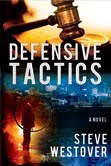
Defensive Tactics- Book Review by Jeffrey Needle

Jeffrey Needle is a well respected book critic in the LDS community. He writes for the Association of Mormon Letters (AML) as well as LDSbooklovers.com. As an author I would love to hear how marvelous and brilliant my work is, but lets be honest, that's not realistic. As a new author I have much to learn.

It is beneficial to hear fair and honest critique, including the bad and the ugly. I appreciate Jeff taking the time to review Defensive Tactics. Here are a couple of my favorite blurbs from the critique.


"Westover is a pretty good writer, and he knows how to keep things going. And he's really good at drawing characters out, giving us a pretty complete picture of each of the main players."


I also like..."Westover does a few innovative things with his work, including an ending that just screams that a follow-up is on the way."


And this isn't all bad...

"The plot moves along at a frantic pace, leaving the reader wanting to catch his breath." And "...we find ourselves cheering for the good guys and hoping the bad guys finally get what's coming to them."

And although there is criticism mingled with praise, I enjoy his conclusion.

"Defensive Tactics” is one of those books you read when you want to suspend your rational facilities and get lost in one heck of a good story. Yes, I actually enjoyed the book, despite my misgivings about predictable plotlines and contrived coincidences. Just remember to turn off your rational processes. It is, after all, fiction. Its intention is to distract and entertain, and this book does both."


To read the full review, check out LDSbooklovers.com at the link below.


http://www.ldsbooklovers.com/bookreview.asp?rid=273&bid=2600&pid=0

Tuesday, August 24, 2010

Choices


2 Nephi 2:27 Wherefore, men are free according to the flesh; and all things are given them which are expedient unto man. And they are free to choose liberty and eternal life, through the great Mediator of all men, or to choose captivity and death, according to the captivity and power of the devil; for he seeketh that all men might be miserable like unto himself.


When I was 10, I chose to disobey my mother and play with matches. When she came into the bathroom and saw the match sticks in the tub, and smelled the smoke, she knew what was going on. She asked me, "Steve, did you play with matches?"


I then made another bad choice. I looked into her eyes as innocently as I could and told her, "No, mom. I didn't."


Later that evening my brother fetched me from the neighbors house because my dad wanted to talk to me. I knew I was busted. I walked into the living room where he and my mom were sitting on the couch. He looked at me and said "I want the truth."


I immediately responded, "I did it dad."


I was old enough to know right from wrong and I knowingly chose to be disobedient. I also chose to compound the problem by choosing to lie about it. I was free to choose, and I chose poorly. I did not, however, get to choose my consequence.


My parents chose to teach me a valuable lesson, and as Halloween was fast approaching, they knew the proper punishment. That year I was not allowed to Trick-or-Treat with the family.


I remember looking from the window in my room, I may have even been crying, bemoaning my fate, as my brothers and sisters left to Trick-or-Treat. It didn't seem fair. I was a captive in my own room. The choices I made, to play with matches and to lie, removed future choices from me. As a captive, I was unable to choose to Trick-or-Treat, or eat yummy candy, or dress up in a costume.


Silly example? Yes. But as we learn in 2nd Nephi, we are all free to choose liberty and life, or captivity and death. It seems like a simple choice, doesn't it? The trick is remembering the promised consequences before we make a choice.


Every choice we make in regards to obedience to God's law, helps to establish the foundation upon which we make future choices. When King David looked upon Bathsheba and then sent her husband Uriah to the battle front, he made bad choices, but were they the first bad choices he had made? No. It was merely a reflection of the man he had become over years of making bad choices.


On the other hand, every good choice we make strengthens us and builds a sure foundation beneath us as we strive to become the kind of men and women that Heavenly Father desires us to be. With every choice we make, we should ask ourselves the question "Will this lead me closer to captivity and death, or towards liberty and eternal life?"
Its a simple choice.

Wednesday, August 18, 2010

LDS FICTION- DEFENSIVE TACTICS

Click on the Link to LDS Fiction to read the first chapter of DEFENSIVE TACTICS.
8/18/10

Defensive Tactics by Steve Westover
Posted by LDS_Publisher at 7:00 AM
Title: Defensive TacticsAuthor: Steve WestoverPublisher: Cedar FortRelease Date: August 12, 2010ISBN: 978-1599554457Size: 256 pages, 6x9, paperbackGenre: Suspense

Paul Stephens has it all--a wonderful job at the FBI, a new girlfriend, and a great apartment. Even when Jimmy, a friend from his past, unexpectedly ends up on his couch, Paul has no worries. But when arresting a corrupt judge puts his girlfriend's life in danger, Paul and Jimmy will do anything to save her. How far will Paul go to protect the ones he love?

Monday, August 16, 2010

I Am a Pistachio: Book Review: Defensive Tactics by Steve Westover

I Am a Pistachio: Book Review: Defensive Tactics by Steve Westover

Here are a few lines from Rebecca's review but please check out the entire review on her blog by clicking on the link above.

"What I enjoyed most about this book was how the main characters all grew and changed in various ways. They all had to search deep inside themselves to find out what they were willing to do (or weren't willing to do) to maintain their personal standards.

Overall, I found Defensive Tactics a quick, intriguing read that earns its place in the world of LDS-themed fiction."

Congratulations- Free Book

I'd lke to thank everyone who has signed up to follow my blog. August 15th was the final day to sign up for an entry to win a free copy of my new book, DEFENSIVE TACTICS.

I've had 30 people sign up so I decided to give away two copies instead of one. The winners of the free books are... Drum roll please...

Ann Bradshaw and Jone Connel. Thank you and congratulations.

Steve

Monday, August 9, 2010

Defensive Tactics- Officially Released

The official release date for Defensive Tactics was yesterday and I am happy to report that according to Cedar Fort, it is already #9 for the week among Cedar Fort publications. Here's the list.

Friday, August 6, 2010

Worth Checking Out...
First off, the Top 10 sellers this first week of August:
#1- Shattered Silence, by Melissa Moore & M. Bridget Cook
#2- Luck of the Draw, by Rachael Renee Anderson
#3- Zucchini Houdini, by Brenda Stanley
#4- Reluctant Soldier, Reluctant Saint, by Tom Roulstone
#5- Welcome to Stalk Lake City, by Sheralyn Pratt
#6- He Knows You, by Jill Lash
#7- Lipstick Wars, by Christine Thackeray
#8- The Divine Virtues, by Richard Rife
#9- Defensive Tactics, by Steve Westover
#10- Doctrine & Covenants Made Easier #1, by David J. Ridges

Monday, August 2, 2010

Thursday, July 22, 2010

Westover's Leftovers- Really?

In the URL of my blog you will see "Westovers Leftovers" in the title and I've had a few questions about why I use the simplistic rhyme on my Blog, so I thought I'd answer. Here it goes...

I was in the 6th grade and the world was my oyster. I was a bit of a trouble maker in class but when the it came time to elect a student body President, I thought, "why not run myself?". If elected I would ensure that chocolate pudding was served at every lunch and recess would be extended an extra 5 minutes. It sounded great, but then it came time to campaign and I had no experience in this area so I turned to my parents for their expertise. Big mistake.

I was told that the first thing I needed was a catchy slogan and it was suggested that I use this gem, "Reach for the stars with Westovers Leftovers." Despite the disgusting image that was conjured in my mind of flesh on a stick, reaching towards the sky, I had no better idea so I used it.

The second thing I needed was advertisement. Afterall, how would people know about my wonderfully catchy slogan unless I told them about it? My parents had an idea. Why not advertise during recess by writing the slogan on a sandwich board (like the picture above). The concept was simple, but brilliant, so I did it.

A couple of days before the election I took the sandwich board to school, with my awesome slogan colored brightly on the front and back, and wore it around at recess. I've got to admit, people noticed, but in hindsight, I don't know that it was the kind of possitive attention I was looking for. In any case, I rode the "Westover's Leftovers" horse as far as I could, but in the end, I was not elected student body president. It was their loss...no extra pudding or recess time. What were they thinking?

"Westover's Leftovers" has become a kind of embarrassing badge of honor, so I give it a place of honor on my blog. The end.

Wednesday, July 21, 2010

Defensive Tactics Drawing


Sign up to follow my blog and you will be entered to win a free copy of Defensive Tactics. The drawing will be held on August 15th.
Scroll down further on the blog to find a book synopsis and the link to order at Amazon.com
Thank you for your support.
Steve

Thursday, July 1, 2010

The Tomato Plant "Problem"


We plant and nourish tomato plants with the hope and expectation that one day, the plant will begin to bear fruit. We look forward to eating them fresh, or canning salsa, or making delicious spaghetti sauce, but sometimes we are not prepared to harvest the fruit of our labors.

Before we know it, 1 plant can be overloaded with fruit, and if we have multiple plants, we find ourselves swimming in tomatos with no idea what to do with all of them. In some cases we allow the bugs to creep in and gnaw at our fruit, or we allow them to drop to the ground and rot. When we planted, we liked the idea of having tomatos, and we value the fruit, but we find ourselves unprepared to harvest our crop.

Sometimes our lives are like tomato plants. We begin a project, or two, or three, not knowing when we will see the fruit, but then, all at once, the fruit appears and we don't know how to manage it. We know we don't want to see the fruit we labored for, rot on the ground, or be destroyed by insects, but we don't feel we have the strength, or time, or patience, or ability to harvest all the fruit.

This summer, I have experienced the tomato plant "probelm".

Here's the rundown... 1-Last Fall, I accepted the assignment of serving as President of our local Optimist Club, scheduling activities and fund raisers that benefit the youth of the community. It's a wonderful activity, but the busiest time for the club is late spring/early summer. 2-For a couple of years my wife and I have been attempting to sell our home and acreage to buy a larger home with a smaller acreage. Finally, in Mid-June it was time to paint the new house and move in. 3-Also, I have been writing a couple of novels and as it turns out, in late spring it was time to re-edit and get my first book ready for Summer release. 4-In late spring I agreed to coach my son's baseball team and then a few weeks later 5-I was called to be a Bishop of the brand new Far West Ward. And now that we've been in our home for 2 weeks, 6-it is time to have family start arriving for visits throughout the summer.

Each of these tomatos is a blessing in my life, and individually are not difficult to manage, but I wasn't prepared to receive all of them at the same time. Don't get me wrong, I'm not complaining, but I did feel overwhelmed and wondered how I would possibly find time to harvest all the fruit without it going bad.

What's the moral of this story? 1. Plan ahead and don't overcommit. 2. If you do find yourself with the tomato "problem", put your head down and get to work. The busy tomato season will end eventually, but in the mean time, its time to work hard, spend the time to make sure all commitments are met and the fruit is harvested. 3. Remember that each tomato is a blessing, not a "problem".

Wednesday, June 23, 2010

Defensive Tactics- Available for Pre-sale on Amazon

In a world of corruption and moral relativism, how far will you go to protect the ones you love?

Paul Stephens has it all--a wonderful job at the FBI, a potential new girlfriend, Emily, and a great apartment. Even when Jimmy, a friend from his past, unepectedly ends up on his couch, Paul manages to keep it together, despite Jimmy's eccentric ways and sudden interest in Emily. But when a plan to arrest a corrupt judge puts Emily's life in danger, Paul is forced to make decisions that put everything on the line. And with Jimmy along for the ride, anything can happen as they race to save Emily.

Full of suspense, action, and surprises, Defensive Tactics navigates the maze of burgeoning relationships and the rigors of investigation to ultimately show just how much the bonds of friendship can endure.

http://www.amazon.com/s/ref=nb_sb_noss?url=search-alias%3Daps&field-keywords=steve+westover%2C+defensive+tactics

Tuesday, June 22, 2010

Monday, June 7, 2010

The Writing Process- Part Two- The Story

Whether it's Dr. Seuss with his silly rhymes, or Brandon Mull writing about magical places, or Stephen King telling a frightening tale that will make it just a little bit harder to sleep at night, one critical need remains constant through genre and stylistic approach; the ability to tell a compelling story. Grisham and Twain, Hemmingway and Faulkner all persist as reader favorites, not because of the way they conjugate verbs or punctuate their sentences, but rather, people love them because of the stories they tell.

Sometimes authors get so excited about writing in first or third person, or using free-indirect discourse, or making their sentences longer, or shorter, or making the language of characters distinct with crazy dialects, that they forget their main purpose in writing a story; the story. Sure, we want to know the characters, their strengths and weaknesses and we want to know about their surroundings, their thought processes and motivations, but all of those things, as interesting as they may be, should be included in the writing as a way to advance the story.
The individual components of a story are not all-important in and of themselves. For example, amazing rims on a car, or new spark plugs may be great, but only insofar as they increase the value of the car, and make it go. Great rims don't mean much if the car is stuck in the driveway. Likewise, a beautifully constructed sentence won't have much value if it detracts from the mood or rhythm of the story.

Have you ever felt that the author was simply writing to impress himself, or is so enthralled about writing chapters and chapters about the sewer system of Paris that you've totally lost interest in the redemptive story? I have. By focusing on the reader, instead of the author, the author has an opportunity to stretch beyond his own comfort level and create something for others to enjoy, not merely pages to be tolerated as a sidetrack back to the story.
Hopefully an author's "ideal reader" is not himself. If it is, he will probably be enthralled with his own work, but will not likely expand his audience very far.
Focus on the story. Make the words count. Use literary tools to help you succeed in telling a compelling story. But remember, the simple act of using literary tools does not make writing successful, the story does.

Wednesday, June 2, 2010

The "Ideal Reader"

Throughout his book On Writing, Stephen King often refers to the "ideal reader". What is the "ideal reader"? you ask. Let me explain.

The ideal reader is the person you are thinking about when you are writing. On my first book, Defensive Tactics, my wife Mica was my ideal reader. As I was writing, I found myself asking, "What will Mica think of that", or I would imagine her laughing at a particular joke or scene. I was writing for her appreciation and to her sensibilities as she was representative of the general audience I was attempting to appeal to.

On my second book, Crater Lake: Quest for the Prison Key, my ideal reader was my 11 year old daughter. Crater Lake was written for a different audience in general, but just like on the first, I found myself wondering, what will Lindsay think about this or that, and I wrote scenes that I knew she would appreciate. What will scare Lindsay? When I figured it out, I wrote it. What will make her laugh and what will she think is dorky. I tried to avoid the dorky.

Even though my ideal reader was different for these two books, the concept is the same. I couldn't wait for them to read what I had written for them and ultimately, when I was finished, I listened to their feedback and made some corrections where I had miscalculated.

Thinking of someone you know well and respect, and what their reactions will be to certain content, can help guide you in the writing process. It places the focus on the reader, instead of the author. What the reader enjoys and finds funny, or frightening, or exciting and cool, is much more important than writing something that only I find interesting.