Wednesday, May 26, 2010

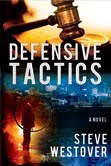
Defensive Tactics- Cover

Defensive Tactics is a story of struggle and escape from forces seeking to destroy.

Years after a family tragedy left him emotionally scarred, Jimmy finds himself in a desparate situation so he turns to an old friend. Paul is an up and coming FBI Agent and agrees to help Jimmy, but almost immediately regrets it when Jimmy starts making a play for his girlfriend, who is also an Agent in the Kansas City Field Office.

As Jimmy and Paul struggle to become true friends, they are pulled into Emily's undercover assignment aimed at bringing down a corrupt federal judge. The assignment turns out to be more dangerous, and more difficult than Emily first anticipated, forcing her to decide how far she is willing to bend morally, to see her mission through. As the three new friends fight to protect each other and overcome conspiracies of organized crime, they must evaluate who they really are, and who God wants them to be.

Monday, May 24, 2010

On Writing- Review


Stephen King is an amazing story teller. Even when he is telling stories about writing and the lessons he has learned. On Writing, is a funny, entertaining and insightful book about honing the craft of writing that every writer, or aspiring writer, should read.
The first lesson I learned from On Writing is this, Don't Overplan your writing. What does this mean, you ask? Let me explain.
Stephen King writes because he loves to, but he also writes because he is disciplined. He has a writing schedule he keeps, and when he's not writing, he's reading, or watching TV and movies, all which help to spur his imagination. One of his pet peeves, and mine, is watching a movie or reading a book that is predictable. Maybe we identify the killer in the first scene. Maybe it is so obvious what the hero is going to do, we can just put the book down or turn off the show because there is no use in finishing. Why is so much of our entertainment so predictable? Because the writers follow the same patterns. They plan what will happen, and then write to meet that plan. Unfortunately, readers and even TV watchers are often too smart for this.
Stephen King was once asked "How come your books are so unpredictable"? He answered, "Because when I write them, I don't know what's going to happen next. If I (as the writer) don't know what will happen next, how can the reader?"
Writing needs to be a natural progression. Scenes need to unfold and characters need to develop organically, just as they do in real life. Now, every writer's process is different, and that is good, but it is hard to argue with the success Stephen King has enjoyed.
Most often, he begins his writing with a question, or a situation and then lets the writing unfold from there. For example, he might ask the question, "What would happen if a famous writer was trapped with a psychotic fan?" From that, he wrote Misery. Or, "How would a man who was wrongly imprisoned, reclaim his life and find joy again?" The answer, is The Shawshank Redemption.
We often need a blueprint, to keep us on track, but we shouldn't overplan every aspect of our story, or characters. Things become too predictable that way, and what fun is reading a 300 page book that you've figured out by page 20?

Monday, May 17, 2010

The Writing Process- Part 1

Every writer has their own process for finding material to write about, and even the physical process of writing itself. Some have a muse, or a picture they look to for inspiration, while others find interest in mundane daily activities. Some writers type on a laptop, sitting on their favorite chair or at a quiet desk, or scribble on pads of paper and then later reassemble their thoughts. No matter what process the writer employs, or the inspiration the writer may seek, the most important thing for a writer to do, is write.

A writer should write. Kind of a no brainer, right? It is, but just like other "no brainers", sometimes we fail to do the basic, simple things, like saying our prayers, getting the oil changed, or balancing the checkbook. We know we should, but we find other things to fill our time, or we simply fail to plan our time wisely.

The first thing every writer should do, is schedule time to write. Yes, this is basic. But we lead busy lives, coaching baseball and serving in our church and community. We want to spend time with our family and of course, most of us need to work full-time. Should I write in the morning or at night? On my lunch break? How much time should I alot? Whatever time works best for you, schedule it, and be diligent in sticking to that schedule.

We write because we love it. We want to express ourselves. We find satisfaction in creating something new. We write to magnify our talents. We write because we are curious to see where the story leads. Whatever the reason is, if you are a writer, or hope to be a writer, or just want to try it out, write...write...write. Its a "no brainer".

Monday, May 10, 2010

Kansas City Temple- Groundbreaking

On Saturday May, 8 2010, my family and I were blessed to attend the ground breaking ceremony for the new Kansas City Area Temple. Elder Rasband, Senior President of the Quorums of the Seventy presided at the event.

It was a cool and windy day and the children didn't necessarily appreciate all the dirt and cold, but 30 years from now, they will be able to tell their children they were at the groundbreaking for the first Temple in the Kansas City Metro area. Then, they will remember what a momentous day it was and how blessed they were to attend.

Now, we look forward to the Temple Dedication in a couple of years and hope to be blessed with tickets to attend there as well.

Wednesday, May 5, 2010

Far West Ward- 1st Meetings

On Sunday, May 2nd, the Far West Ward met together for the first time. To my knowledge, a congregation at Far West has not been organized since the saints were forced to flee in late 1838. For many, the creation of this new Ward is the fullfillment of a dream and an answer to prayer.

It was a wonderful day. Many members had a chance to bear testimony during fast and testimony meeting, and during a joint Priesthood/Relief Society/Young Men/Young Women meeting, we were able to discuss hopes and dreams for the Ward.

As we embark on building a Ward from the ground up, it is wonderful to know, that as long as we do things in the Lord's way, we can make our Ward family into something special. We are limited only by ourselves: our willingness to spend time and effort in accomplishing the missions of the church as we strive to become a Zion people.

Sunday, April 25, 2010

Creation of the Far West Ward

When Heavenly Father calls any of us to serve within the Church of Jesus Christ of Latter-day Saints, he places in us great trust. He knows our capabilities but even more importantly he understands our hearts and desires. He blesses us with opportunities to stretch and grow as we mold our lives and become the kind of people he wants us to become.

On Sunday, April 18th, 2010 I was sustained as the Bishop of a brand new ward at Far West Missouri. It is always exciting to receive a confirmation that Heavenly Father is pleased with our efforts and testimony, and in this case, it is also very exciting to have the opportunity to organize a new ward from scratch. To my knowledge, there has not been a ward at Far West since the saints were expelled from Far West in 1838. This fact alone makes this new ward historic. But for our ward to become what our Heavenly Father desires, we must strive to become a Zion people.


"The Lord called his people Zion because they were of one heart and one mind, and they dwealt in righteousness; and there was no poor among them." (Moses 7:18)


That is what our Father expects from us.


More important than where the ward is located, is who we are as a people. We all have the opportunity to stretch and grow to become what our Father wants us to be. As we dedicate ourselves to righteous living and service, as we express our love for the Savior and testify through our service, as we strenthen our families and our youth, we will progress towards being a Zion people.


These are exciting times. As always, our first priority should be upon growing our testimonies of the Savior and serving others, as he would have us do.

Friday, April 9, 2010

Escape from the Dark


After a long process of writing, editing and a lot of hoping, I have received an offer to have my first novel published.
Escape from the Dark should be out by the end of the year.

After agreeing to help a friend from his past, FBI agent Paul Stephens questions the wisdom of allowing Jimmy into his life and introducing him to Emily. Jimmy is intrigued by Emily’s beauty and poise, and he is not hindered by thoughts of loyalty or propriety as he pursues Paul’s girl.

As a recent transplant to the Kansas City FBI Field Office, Emily is assigned to a taskforce aimed at bringing down a corrupt Federal Judge. Thrown together amid the turmoil of Emily’s new undercover assignment, the three friends face intense emotional, spiritual and physical challenges. As they struggle to navigate through burgeoning relationships and the rigors of the investigation, their bond of friendship strengthens, as they become the people they truly want to be.

Monday, March 22, 2010

The First Five Pages


The First Five Pages: A Writers Guide to Staying Out of the Rejection Pile is a valuable book for any aspiring writer to read. The rejection pile at any publishing office contains the vast majority of all manuscripts submitted to them.

I have to admit, when I completed my first book, I thought I was kind of special. I thought I had accomplished something unique. Little did I know, everyone and their cat has written a book and all hope to have their work published. When I read The First Five Pages by Noah Lukeman, my eyes were opened a little bit and I realized I was actually just one of the masses.

What made my work special? How would it stand out in the crowd. When I realized that publishers are inundated with manuscripts, and that their main goal is to simply get through their pile of paper, it made me realize I may need to rethink my first 5 pages. I had to make my first 5 pages interesting enough, that the editor would find it worth their time to keep reading.

The first thing I did, was re-read my manuscript and cut out 3/4 of all adverbs and adjectives I had included, thinking it made the text rich and beautiful. I realized that the extreme use of adverbs and adjectives simply made my work seem silly and amateurish.

This was a great read, and very valuable for me personally.

Monday, November 9, 2009

Meeting with Elder Nelson

On Saturday, November 7th, 2009, I had the wonderful opportunity to meet with Elder Russell M. Nelson of the Quorum of the 12 Apostles. The Stake Presidency was being reorganized and Elder Nelson was assigned, along with Elder Anthony Burns of the Seventy, to come to the Liberty Missouri Stake to reorganize the leadership. Elder Nelson Stated in our Priesthood Leadership meeting, that with the rapid growth of the Church, and the ever increasing numbers of Stakes and Districts within the church, the days of having an Apostle of the Lord visit one Stake for a conference is likely behind us. With that in mind, I view my opportunity to meet with him privately , and be interviewed by him, as a once in a lifetime blessing.

As a member of the Stake High Council, I was one of the nearly 30 members of our Stake interviewed as a potential new Stake President. Now, having never been a Bishop and only being on the High Council for a mere 6 months, I viewed the liklihood of being chosen as Stake President somewhere between impossible and 1% probabilty. I was right. Largely, because there wasn't much risk in being called upon as a Stake President, I approached my interview with enthusiasm, and with the simple mindset that I would enjoy every minute I was able to talk with him. As it turns out, I had 5 minutes.

When I entered the room, Elder Nelson and Elder Burns stood to greet me and indicated where I should sit. Elder Nelson was taller than I expected and for an 85 year old man seemed unbelievably spry and energetic. I sat and Elder Nelson pulled out my profile sheet I had submitted to the Stake 2 weeks earlier. He reviewed with me briefly some of the information on my profile such as, my age, where I met my wife and went to college, where I work and my duties there. He noted with interest that I served my mission in the Independence Missouri Mission which includes the Liberty Stake. He asked about my mission Presidents but embarassingly, I only remembered the name of my second President. He then asked me about men I would recommend to be Stake President. I gave him three names and explained why I chose them.

After those formalities were finished, he turned to the comment area of my profile sheet where I had taken the opportunity to ask a question. The question was: In the early days of the restored church, leaders regularly spoke of spiritual manifestations, visions and revelations. In modern times the Brethren do not tell us of similar experiences. Why is this? Did the early restoration period have more of these unusual manifestations whereas the leadership now primarily receives revelation and inspiration by the power of the Holy Ghost? Or is it a policy, or decision to keep these experiences private and sacred?

I asked the question because I regularly hear members of the church make statements about how the Prophet and Apostles have all seen the Savior personally and sometimes insinuate that they sit accross the table from the Savior in meetings etc. While I don't doubt this is possible, I had never heard it stated as fact and I would prefer to base my beliefs on fact, rather than supposition. His answer was simple; I paraphrase.

In the early days of the restoration greater spiritual manifestations and visions were required to accomplish the work of the Lord with relatively unexperienced men. They received the manifestations they needed to progress the work, and of course restore the keys of the Priesthood. The needs today are different, and in 25 years, they could be different still, but the brethren are skilled at recognizing the promptings of the spirit, and they rely on the Holy Ghost for their direction. Now, this in no way precludes the possibility that some have received special manifestations, or that they are still possible, but the Holy Ghost teaches and guides the Brethren, just as it teaches and guides us, which is why we must all learn to recognize and act on the promptings of the Spirit.

The five minutes went very quickly, in fact I had to look at my watch once I left the office to ensure I got my full five minutes. I did. Later I had the opportunity to attend the Priesthood Leadership Meeting, the Saturday Adult Session and then the Sunday morning Session where the new Stake Presidency was called and sustained. All in all, it was a wonderful weekend.

Based on my simple experience with Elder Nelson, and knowing that the other members of the High Council and Bishops had very similar experiences, I have no question in my mind, but that the Holy Spirit directs the Prophet and Apostles in all they do. Perhaps the greatest difference between them and us, is their ability and confidence in recognizing and acting on the promptings of the spirit.

Thursday, October 1, 2009

Like a Dog to his Vomit

After the death of his father, Lot went to live with his uncle, Abraham. When the Lord commanded Abraham to move to the land of Bethel, Lot also went. They separated their households and Lot had first choice of the land he and his household would possess. Abraham settled the remaining area.

The land Lot chose was fertile and beautiful and it appeared he made a wise decision about where he would establish himself. But Lot pitched his tents near the city of Sodom while Abraham took his household in the other direction toward the land of Canaan.

Lot was a good man and tried to teach his children the gospel but he lived in one of the most evil cities on the earth. The city was so wicked the Lord prepared to destroy it. Abraham was worried for Lot and his household because he knew Lot was a good man and he plead with the Lord to spare the city if 10 righteous people could be found. The Lord agreed that if 10 righteous people could be found He would not destroy the city. Sadly, 10 righteous people could not be found.

The Lord sent two angels to destroy Sodom but first they met with Lot and warned him to take his family and quickly leave the city. Lot’s married children refused to listen and would not leave. Only his two unmarried daughters were obedient and agreed to leave the city.

In the morning the angels told Lot to “Arise, take thy wife and thy two daughters, which are here, lest thou be consumed in the iniquity of the city.”

Lot hesitated. Maybe he thought about his home and possessions, but more likely he was thinking of his married children who refused to leave. The angels knew there was no time to waste so they took Lot, his wife and his daughters by the hand and led them out of Sodom.

The angels commanded them, “Escape for thy life; look not behind thee, neither stay thou in all the plain; escape to the mountain, lest thou be consumed.”

Despite being commanded not to look back on the burning cities, Lot’s wife could not resist the temptation. Unwilling to surrender her will to the Lord’s, unwilling to let go and turn away from the thing she had been commanded, she looked back and turned into a pillar of salt.

We may look at the example of Lot’s wife and say, “what was she thinking? How foolish. I would never do that.” And hopefully we never would.

But are there things in our lives from which we have been commanded to turn away or give up, that we just can’t bring ourselves to fully eradicate from our lives? Do we turn back to our bad habits or sins longingly, like a “dog to his vomit”?

The image is pretty disgusting, but it’s supposed to be. Why in the world would we want to return to our sins like a dog returns to his vomit. Returning to our sins is just as foolish, but we do it.

To go out of Babylon we must turn away from our sins and not look back. We must be willing to give up anything that the Lord requires.

Maybe we are asked to sacrifice our favorite TV show on a Sunday afternoon when we should be doing our home teaching. Or maybe it is sacrificing an addictive habit or behavior, or the pride of a grudge we are holding. Maybe we need to sacrifice leisure time and money to attend the temple or invite a non-member to a family home evening. Maybe we find it difficult to sacrifice our money by paying tithing and a generous fast offering.

Is it safe to say we all have a habit or behavior or maybe even an attitude that we need to turn away from? I think it is. I know it’s true for me. As long as we refuse to turn fully away and not look back, we are keeping our foot in the battlefield of Babylon and Satan has us in his sights. We think we are at a safe distance but we’re not.

We may think our sin is small or insignificant. We may think that even with our faults we are still more righteous than others, but the truth is if we refuse to remove ourselves out of Babylon we are susceptible to the ravages of battle. Because of our carelessness or curiosity or maybe our stubbornness, we are too close and we are in danger.

Wednesday, September 9, 2009

Babylon: Too Close to the Battle

On the night of July 20, 1861 more than 30,000 Union soldiers prepared for the first major battle of the Civil War—It’s known as The Battle of Bull Run because it was set against the distant backdrop of the Bull Run Mountains (also known as the battle of Manassas)

Meanwhile, in Washington DC there was great excitement for the impending battle. The politicians and media were whipping the citizenry into a frenzy, speculating about a decisive and immediate Union victory that would crush the Confederacy. With this in mind, Sunday morning, several hundred people, newspapermen, politicians and average civilians gathered to what they considered a safe distance, high on a rise 5 miles from where the battle was to take place.

As the battle waged, the spectators reportedly ate picnic lunches and drank lemonade but many became dissatisfied with their distant and obstructed view of the battle. Union soldiers visited the group and reported that a sweeping victory was imminent. On this news, some of the spectators, including Congressman Ely of New York decided to get a closer view of the action.

At about 4:00 PM Congressman Ely strolled down the road when a bullet struck the ground near him. He dodged off the road and hid in the trees and at 5:30 he spotted a line of Confederate infantry emerging from a nearby grove. Two officers approached him and asked who he was. When he told them he was a Congressman they arrested him.

Atop the ridge the remaining civilians recognized that the Union Victory was quickly unraveling as the Confederate cavalry charged up the hill. Military officers, dignitaries and civilians were all caught up in the chaos of a full retreat. Fortunately no civilians were killed.

Despite being what they thought was a safe distance from the danger of battle, these people discovered they were too close, but it was too late. It was not safe. Some, like Congressman Ely were enticed by curiosity and excitement to move even closer to the danger. They thought they could avoid the threats but they were wrong. They were caught right in the middle.

We might look at this example and say something like; “it serves them right for being so foolish and getting that close. I would never do that.” Or we might think how grotesque it is to take a picnic lunch to watch a bloody battle. Hopefully we would never be caught up in such foolishness. But are we?

The spectators at Bull Run symbolize the nation’s naïve view of the impending Civil War. They didn’t fully understand the risk, or appreciate the danger. Are we sometimes naïve of the spiritual battles that surround us? Do we underestimate the danger to ourselves and to our families? Or might we be found on the ridge of the battlefield hawking t-shirts that read, “Battle of Bull Run: Been there, Done that.”

Tuesday, July 7, 2009

Unexpected Experiences

From time to time we all have opportunities to try and do new things. Sometimes these opportunities are welcome and sometimes we would rather avoid them altogether, but the opportunities to experience new things generally helps us to stretch our capabilities and grow as a person. I recently had an experience like this.

For the last 12 months I have been assigned to home teach a couple at the furthest corner of our Ward. From my house it took me about 40 minutes to get to the small town where they lived. The couple had never been active and did not seem interested in having a home teacher visit. At least that is my assumption since I was never able to locate the home. I called repeatedly and left messages but I never heard back. I sent letters to the post office requesting an address correction but I never received a correct address. I never met or heard from this couple so I decided to do the only thing I could.

Each month for my home teaching message I sent a copy of a General Conference talk and wrote a personalized message based on the talk. At the end of each letter I invited the couple to church or to at least contact me. I never heard from them, until 2 days ago.

2 days ago I received a call from the sister of this woman. I was informed that the husband died a couple of days earlier and they requested that I say a few words at the funeral. They asked me to keep it to under 5 minutes. I accepted the invitation but having never met the couple, I was a little nervous. I resolved to do the only thing I could, which was to speak about the plan of salvation.

I took off work for a couple of hours and drove to the grave site. I was on time but everyone else was already there waiting. I picked up a program to see when I would be speaking. I was struck with some fear and trepidation when the only statement in the program was "Elder Steve Westover- Officiator".

I approached the funeral home director as the appointed start-time neared. He asked if I was the minister who would be officiating. I told him who I was but asked him if there was a mistake with the program as I had not been asked to officiate. He apologized for the confusion and told me to "Go ahead. You'll do fine." So with no program and nothing more than plans for an extremely brief talk I approached the family and introduced myself.

As planned I spoke about the plan of salvation but went more in depth than I originally intended. I spoke about eternal families and the tremendous joy and hope we can all have because of the Savior and His plan. I concluded my remarkes and then dedicated the grave. Following the grave dedication a military honor guard saluted the war veteran. Despite being a brief service, I think it turned out well.

I was honored to have such an impactful experience and I'm thankful that other experiences had helped to prepare me for this surprising opportunity. I hope I will now have other opportunities to meet with this family and teach them further, assisting them back to the road of faithful church participation.

Friday, May 29, 2009

Fortress of Righteousness

We read in Alma how Captain Moroni fortified the Nephite lands and cities as a protection against angry and aggressive forces which were attempting to destroy his people. He describes his efforts in fortifying the cities in Alma 50.

1 And now it came to pass that Moroni did not stop making preparations for war, or to defend his people against the Lamanites; for he caused that his armies should commence in the commencement of the twentieth year of the reign of the judges, that they should commence in digging up heaps of earth round about all the cities, throughout all the land which was possessed by the Nephites.

2 And upon the top of these ridges of earth he caused that there should be timbers, yea, works of timbers built up to the height of a man, round about the cities.

3 And he caused that upon those works of timbers there should be a frame of pickets built upon the timbers round about; and they were strong and high.

4 And he caused towers to be erected that overlooked those works of pickets, and he caused places of security to be built upon those towers, that the stones and the arrows of the Lamanites could not hurt them.

5 And they were prepared that they could cast stones from the top thereof, according to their pleasure and their strength, and slay him who should attempt to approach near the walls of the city.

6 Thus Moroni did prepare strongholds against the coming of their enemies, round about every city in all the land.

Moroni recognized the severity of the conflict and the nature of his enemies so he prepared strongholds as a protection for his people. His people fortified the cities with heaps of dirt and pickets and Moroni caused towers to be built tall and strong that the people could see and defend should their enemies come upon them.

Likewise, as parents, we must recognize the severity of the evil forces which are pushing upon our families, seeking to destroy us. We must fortify our homes to be strongholds of safety, or as Joseph B. Wirthlin called it, "a fortress of righteousness". We have been given a design, or pattern by our Heavenly Father, through His prophets, to strengthen and protect our families. We can also follow Moroni's example in fortifying our homes like he fortified the Nephite cities.

We can follow a proven design by fortifying our homes, building them upon the righteous principles of the gospel of Jesus Christ. Once we follow this divine design and build our home upon a sound foundation we must maintain our family fortifications. Moroni erected towers to keep vigillant watch in case the enemies came close. Likewise, as parents we must keep watch upon our children to ensure evil influences do not creep in underneath our noses. We must maintain a Christ centered home with both parents standing as equal partners in marriage, keeping guard in the towers overlooking the home.
Dallin H Oaks said, "Happiness in family life is most likely to be achieved when founded upon the teachings of the Lord Jesus Christ. Successful marriages and families are established and maintained on principles of faith, prayer, repentance, forgiveness, love and compassion."

Elder Wirthlin has said, "If Satan can weaken or destroy the loving relationships among members of families, he can cause more misery and more unhappiness for more people than he could in any other way." (Spiritually Strong Homes & Families, May '93 Ensign)

Satan is at war with us. Are we at war with him? And are we taking the threat as seriously as we should or do we suffer from a false sense of security?

Elder Russell M Nelson said, "I know that the earth was created and that the Lord's Church was restored so that families could be sealed and exalted as eternal entities. And I know that one of Satan's cunning methods of undermining the work of the Lord is to attack the sacred institutions of marriage and the family."

The threat against our marriages and families is real but we can have confidence that as we follow God's patterns in establishing and maintaining our families on principles of righteousness and we are vigillant in maintaining the spiritual fortifications of our home, we will be victorious against the forces seeking to destroy us.

Monday, May 18, 2009

Learning the Hard Way

My wife teases me because my memory is often found lacking, but I vividly remember a snow camp I participated in when I was a young scout. This particular camp was on Mt. Bachelor in the Oregon Cascade Mountains.

It was a beautiful crisp day with a cloudless sky and our Scout Troop had spent months preparing for this snow camp, learning how to cross country ski and build snow caves. We learned how to properly design and build the cave allowing for ventilation and drainage of the condensation. Following this design, our snow cave would keep us warm and dry. During our preparations we acquired the proper equipment and clothing and we were ready to go. Our scoutmaster had taught us well.

The day of the camp we were excited. We drove to the mountains and skied a couple of miles in to our site and began to set up camp, but instead of spending the time and putting forth the effort to create a proper snow cave, my friends and I decided we had a better idea. Instead of building the cave, which would keep us dry and warm, we dug a wide ditch, figuring we could lie safely below the cold blowing wind and we could enjoy sleeping comfortably under the beautiful mountain stars. Despite the good teaching and counsel we had received from our leader we had discovered a better way to camp in the snow.

By 5:00 PM the sky was nearly dark and the clouds began to move in. We were tired from all the snow playing and skiing we had done so we finished dinner and climbed into our sleeping bags. We could hear the wind blow harmlessly above us and we were comfortable in our ditch.

An hour or so later fear began to set in as we heard thunder and saw lightning flash across the sky, and then it happened. It rained. And not just a light sprinkle. It rained hard and steady. My comfortable little ditch became a small stream as the rainwater searched for a conduit to run off. My warm down sleeping bag was right in the middle of the stream. It quickly became soggy and cold, but I was determined I would endure and not let the others see how uncomfortable I was. I was not willing to give up my position in the ditch or accept defeat, but the night seemed to last forever. I remember being horrified when I heard snow mobilers come through the camp. I looked at my watch after what had felt like an eternity and realized it was only 9 PM. At that point I knew this was going to be a long and difficult night. I climbed out of my useless sleeping bag which felt like a pile of wet mashed potatos and my clothes were soaked. A couple of my friends were already up so I joined them around a camp stove warming our hands and trying to heat up water for hot chocolate.

After a couple of hours around the stove I was exhausted. I needed to find a place to lie down and get some rest but I knew my sleeping bag was useless so I quietly crawled into my wise scoutmasters snow cave where he, his sons and a couple of others were sleeping comfortably. There was not much space so I squeezed my way in and found some open ground and lay down to sleep on the cold snow in my wet clothes.

I don’t know how much time passed but I recall my scoutmaster waking me up. Apparently my chattering teeth and shaking body had awakened him and as a medical doctor he was concerned hypothermia had set in. Fortunately I survived the night because of his care.

When I was taught and counseled to build a snow cave, I never imagined it would rain, snow maybe, but not rain. I thought building my ditch was just as good, or better than a snow cave. Instead of following wise counsel and having a positive experience with this snow camp, I had to learn my lesson the hard way. I am reminded of the quotation, “an intelligent man learns from his mistakes but a wise man learns from the mistakes of others.”

We have numerous examples in our scriptures of individuals and even entire peoples who ignored the words of the prophets and were destroyed as a consequence. These people thought they knew a better way, or simply didn't care about the counsel that was given. Are we wise enough to learn from the mistakes of others and learn that we must follow the counsel of the prophets of God? Or are we doomed to learn our lessons the hard way, and hope that somehow we are saved from our own foolishness?

Finding Safety in Counsel (Henry B. Eyring- May ’97 Ensign)

“We are blessed to live in a time when the priesthood keys are on the earth. We are blessed to know where to look and how to listen for the voice that will fulfill the promise of the Lord that he will gather us to safety.”

“Sometimes we will receive counsel that we cannot understand or that seems not to apply to us, even after careful prayer and thought. Don’t discard the counsel, but hold it close.”

“When a prophet speaks, those with little faith may think that they hear only a wise man giving good advice. Then if his counsel seems comfortable and reasonable, squaring with what they want to do, they take it. If it does not, they consider it either faulty advice or they see their circumstances as justifying their being an exception to the counsel.”

“Having listening ears requires humility.”

If we have listening ears we will find safety in the counsel of our priesthood leaders and prophets. I hope others will not be as foolish as I was when I was a young scout, disregarding the counsel of my leader because I could not see the reason, or wisdom of the counsel. Even though I thought I was exempt from such counsel, it was meant as a protection for me. Likewise, the counsel of the prophets is meant for each of us. We are not exempt from obeying any commandment or counsel from our Father in Heaven. We will find safety as we heed the counsel of the prophets.